How to Start a Home Bakery in India: The First 90 Days
9 min read
You bake well, friends keep asking you to make their birthday cakes, and someone has already said "you should sell these". The baking is the part you know. What you do not know is everything around it: which bakes to sell, what paperwork you need, how much to spend, where the first customers come from and how to keep orders straight once they arrive.
This guide answers how to start a home bakery in India as a plan for your first 90 days, from your own kitchen, without a shop and without a big loan. It is written for December, when Christmas, New Year and the wedding season bring more orders than any other stretch of the year, but the steps work in any month.
Decide what you will sell first
The most common mistake is launching with everything: cakes in eight flavours, cookies, breads, cheesecakes and cupcakes. Every extra product means more ingredients to stock, more recipes to keep consistent and more questions to answer. Start with one category you can make perfectly every time, and add more once orders are steady.
| Start with | Notice you need | Keeps for | Good for |
|---|---|---|---|
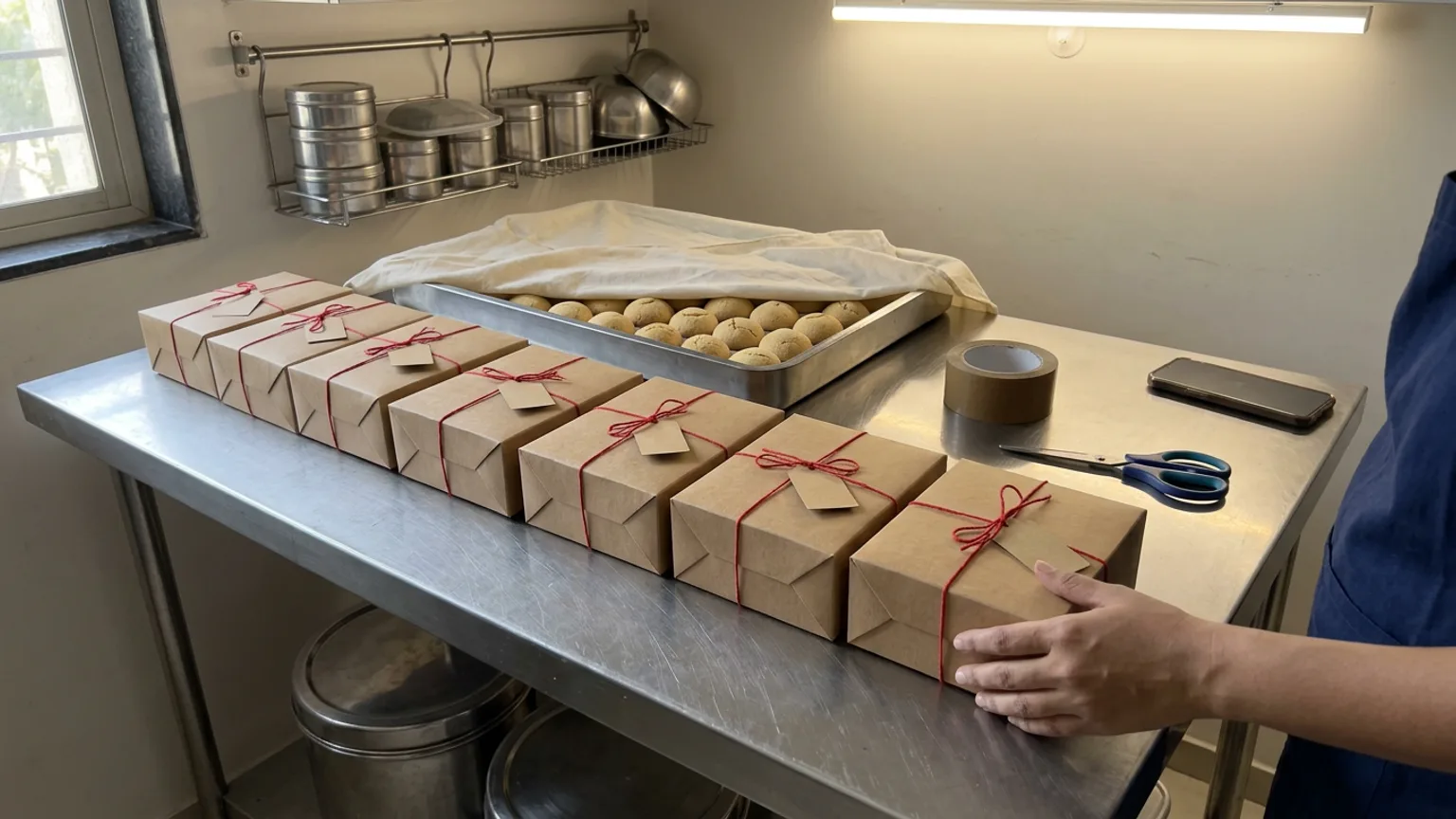
| Brownies and cookies | 1 day | Several days in an airtight box | Gifting, corporate boxes, repeat orders |
| Celebration cakes | 2-3 days | 1-2 days, chilled | Birthdays and anniversaries, higher order value |
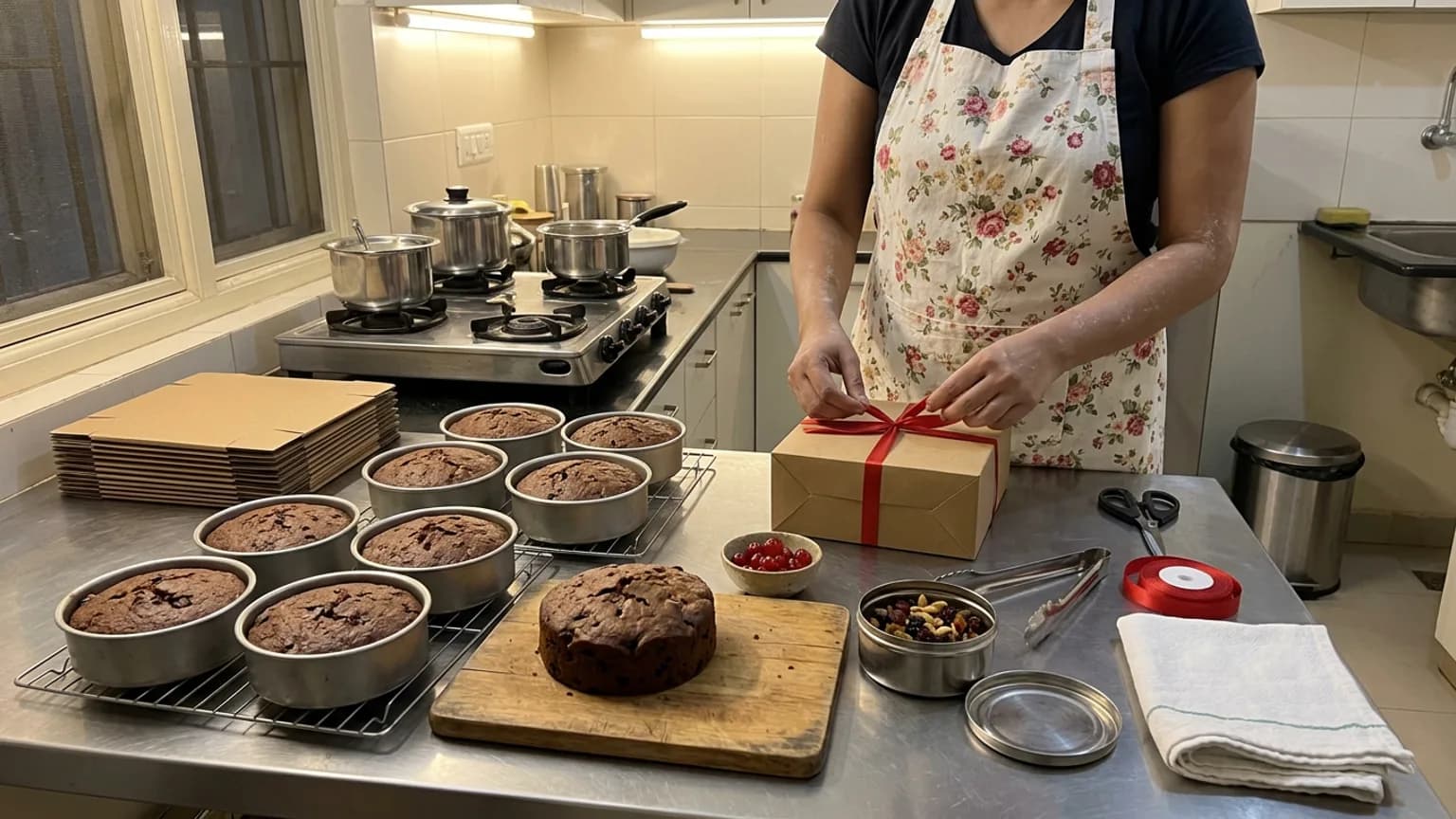
| Dry cakes and loaf cakes | 1-2 days | About a week | Christmas, tea-time, shipping across the city |
| Dessert jars and cupcakes | 1 day | 1-2 days, chilled | Parties and small events |
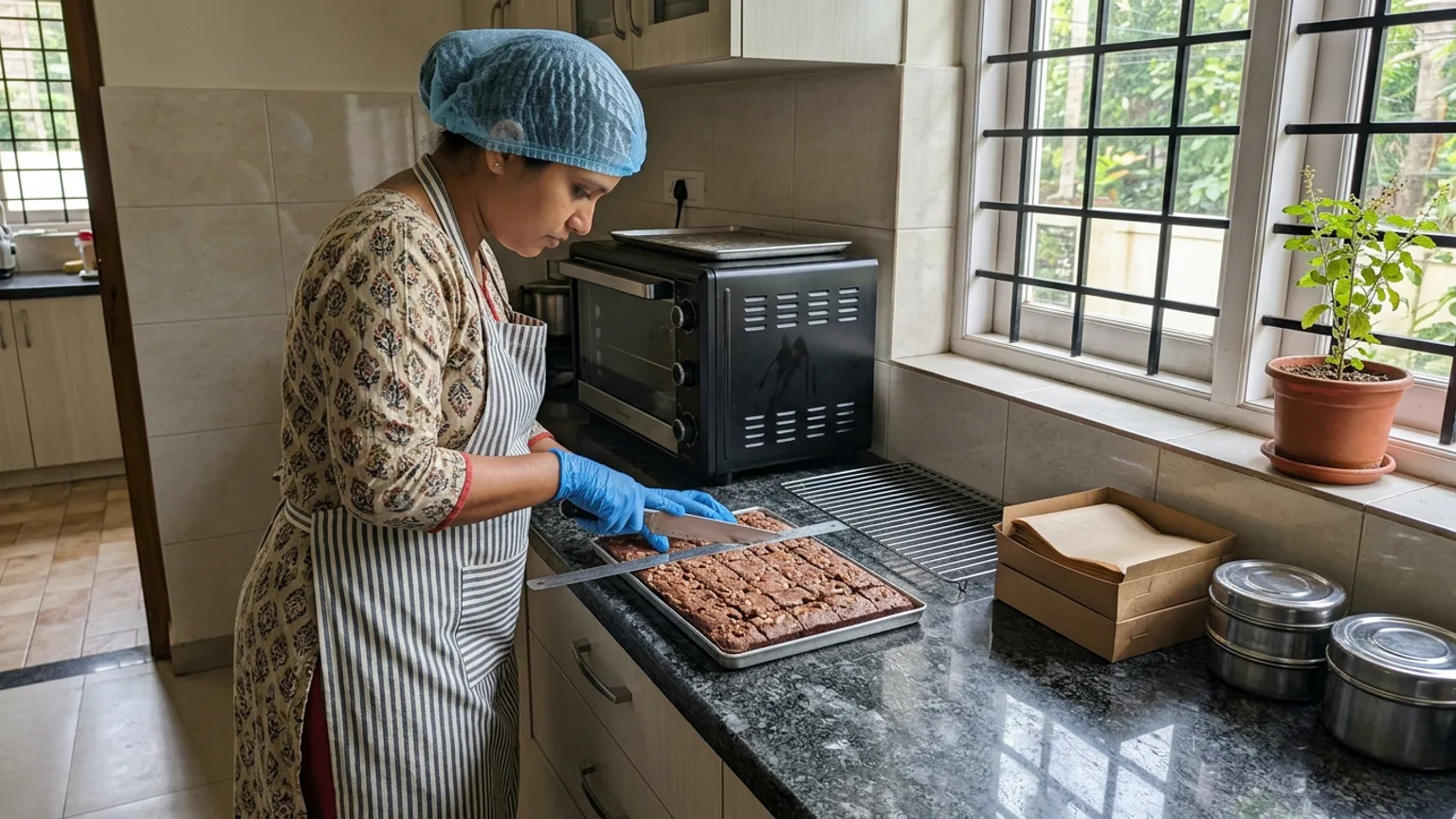
Brownies, cookies and dry cakes are the gentlest start: they keep, they travel well and a mistake costs less. Celebration cakes earn more per order but need decorating skill, cold storage and careful delivery. Many home bakers begin with a short gifting range and add cakes in month two.
Get the paperwork right from day one
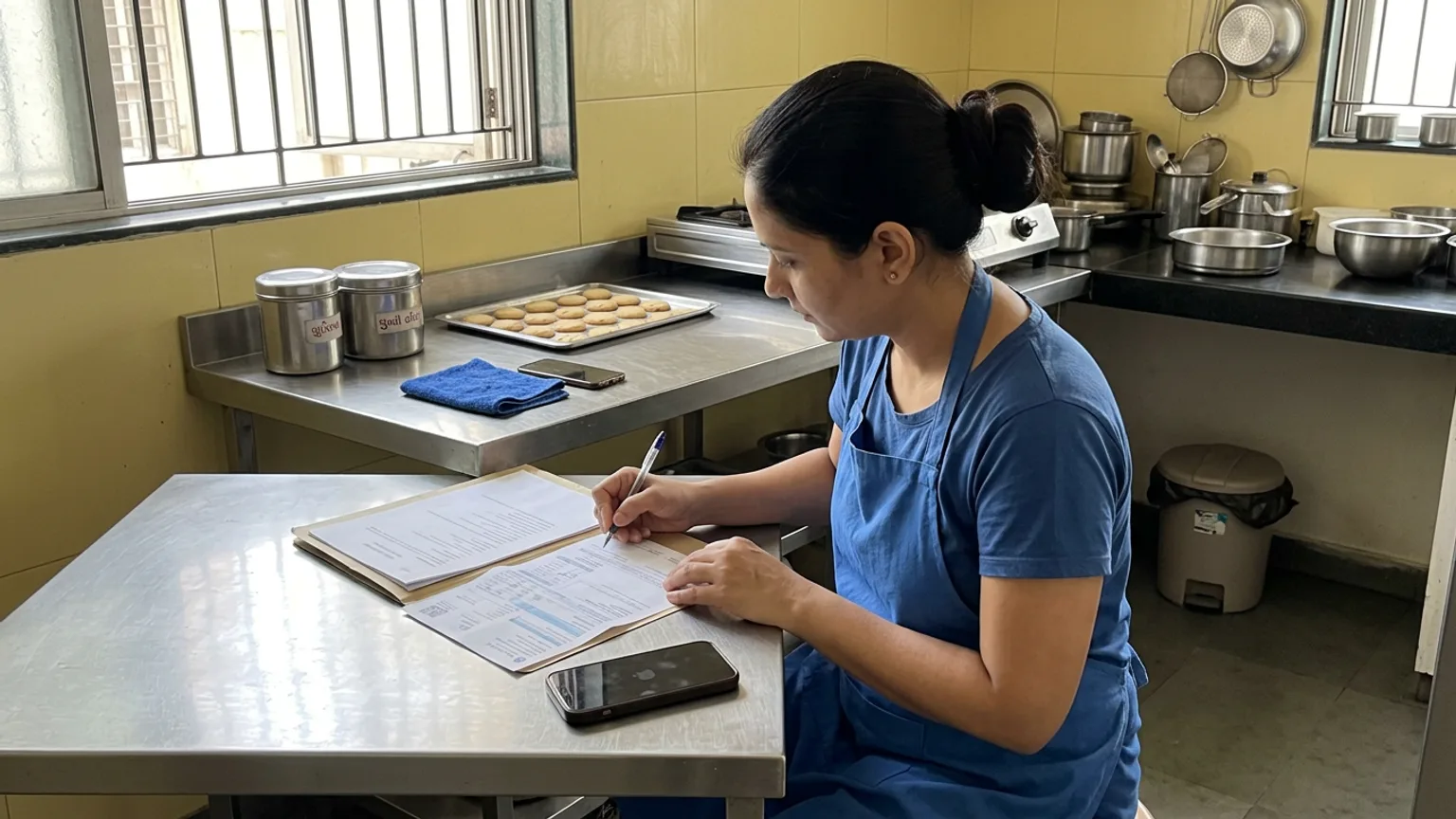
Selling food from home makes you a food business. You need at least a basic FSSAI registration before your first paid order, applied for on the official FoSCoS portal. The turnover limits for each level changed on 1 April 2026, and many pages that still rank quote the old numbers, so read our guide to FSSAI registration for home bakers before you file.
- FSSAI registration. Put the number on your labels, your boxes and your storefront once you have it.
- GST. Most home bakers start well below the turnover where GST registration becomes compulsory, but confirm your own case with a chartered accountant before you take bulk or corporate orders.
- Your housing society. Some societies have rules about running a business from a flat. A short conversation now saves trouble when delivery riders start arriving.
- A bank account or UPI ID for the business. Keeping bakery money apart from household money is what makes the month-end numbers honest.
This is practical guidance, not legal advice. Rules and fees are set by FSSAI and your state, and they change, so confirm each one at the source.
What it costs to set up a home bakery
You probably own half of what you need already. One bakery equipment guide from an Indian restaurant software company estimates a home setup at roughly ₹14,000 to ₹50,000, with the oven and the mixer taking most of it. Treat these as rough ranges and price your own list locally.
| Item | Rough cost | Notes |
|---|---|---|
| OTG oven, 40-60 litres | ₹6,000-22,000 | The one thing worth buying well. A bigger cavity bakes two trays at once. |
| Hand or stand mixer | ₹2,000-15,000 | A hand mixer is enough for brownies and cookies; cakes in volume need more. |
| Tins, trays, racks, turntable, piping set | ₹1,500-3,000 | Buy the sizes you will actually sell, not a full set. |
| Digital scale and thermometer | ₹500-1,500 | Weighing every batch is how a recipe stays the same. |
| First month of packaging | ₹2,000-10,000 | Boxes, cake boards, butter paper, stickers. Order in small lots until you know your sizes. |
| FSSAI basic registration | Check FoSCoS | A small annual fee; the portal shows the current amount. |
Before you spend anything, set your prices. A price that only covers ingredients is the fastest way to stay busy and earn nothing. Our guide on how to price homemade cakes walks through the formula: ingredients, packaging, gas and electricity, your time, then your margin.
Find your first 30 customers
Your first customers are not strangers on the internet. They are the people within a few kilometres who already trust you, and the people they talk to. Thirty happy customers in the first two months is a strong start, because each of them tells others.
Send out tasting boxes
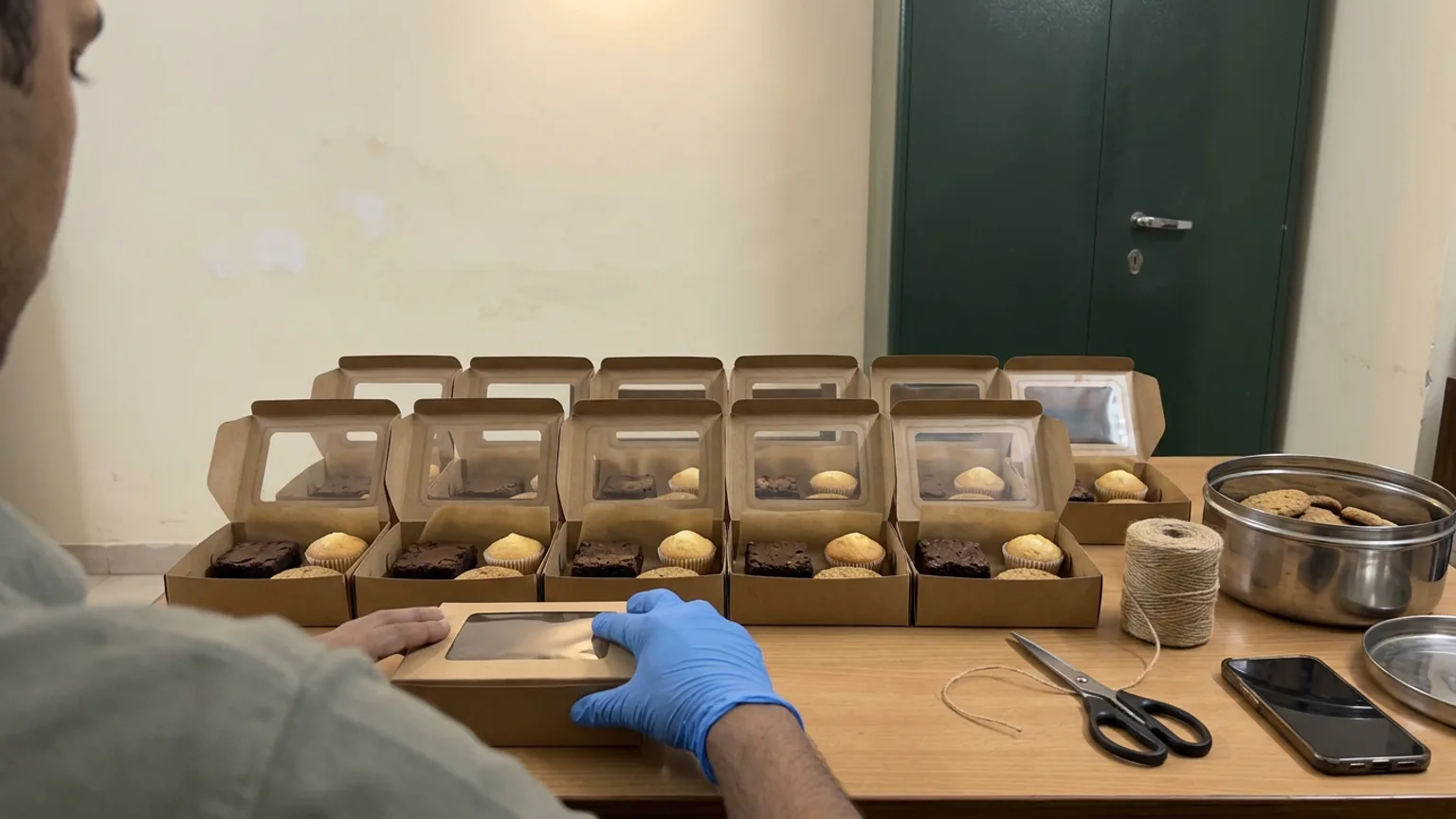
Bake one batch of each launch product and send a small box to ten or twelve neighbours, colleagues and friends who talk to a lot of people. Ask for honest feedback, not praise.
Post in your society and local groups
One clear post with real photos, your five products, prices and how to order. Most societies and neighbourhood groups have a day or a thread for home businesses; follow their rules.
Start an Instagram page with real bakes
Post what you actually bake, in daylight, from the same corner of your kitchen. A consistent look builds recognition faster than a perfect one.
Ask every customer for one thing
A photo of their cake at the party, a review, or a name of someone who might order. Then thank them, every time.
Pitch one bulk order
An office Christmas party, a school event or a wedding return gift. One bulk order can equal a month of single cakes; see our guide to bulk orders for weddings.
Take orders without losing them
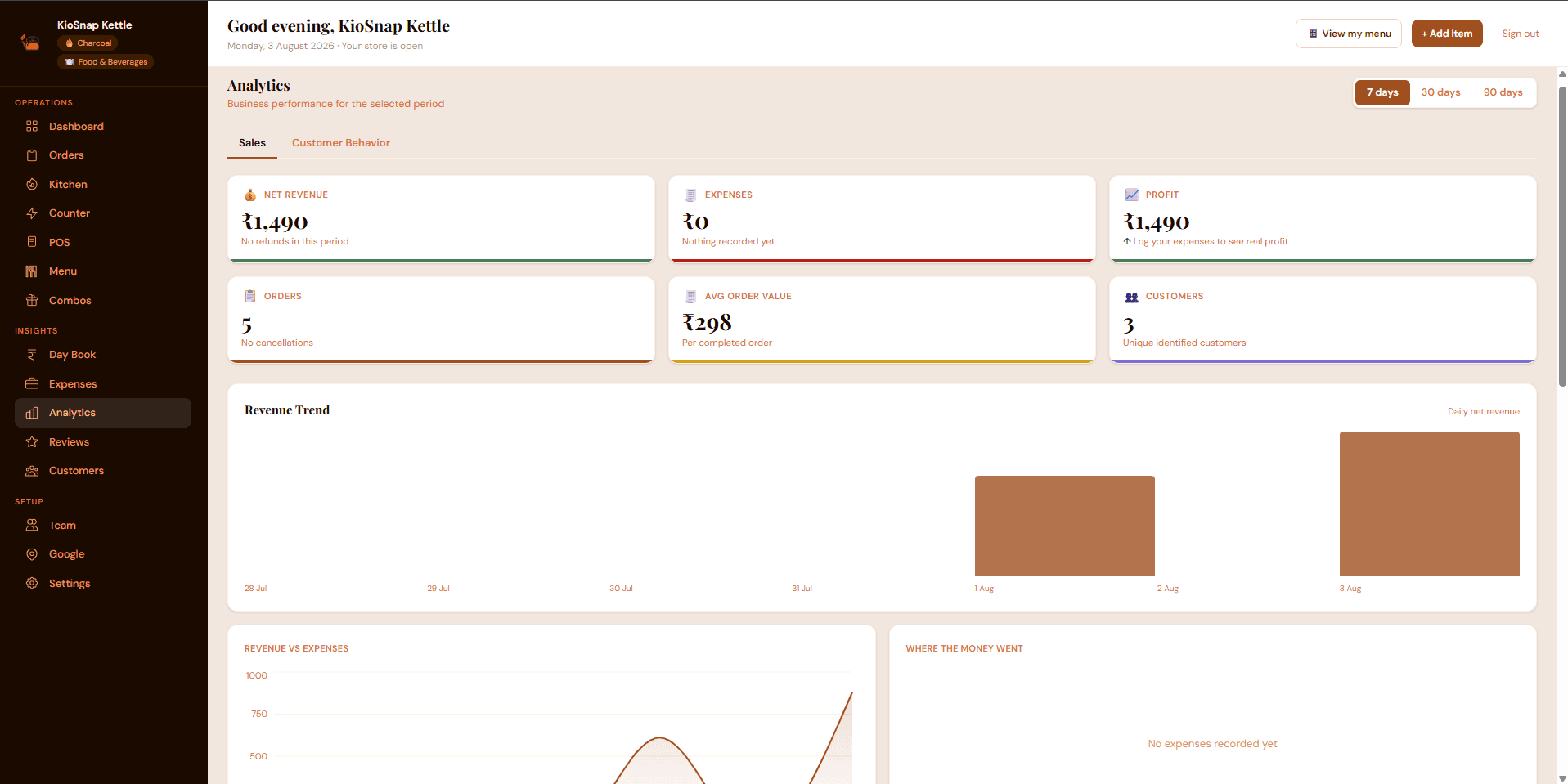
In week one, orders come by WhatsApp and you remember them all. By week six you have twenty chats, three of them for the same Saturday, and one confirmed order has scrolled out of sight. An order is a set of facts (which product, what size, eggless or not, for which date, pickup or delivery, paid or not), and a chat is a poor place to keep facts.
Whatever you use, give customers one place to see your range and order, so they choose the size and the date themselves. On KioSnap, a home bakery gets its own storefront with a link and a QR code. Customers open it in the browser with nothing to install, pick the size, choose a date and time slot with the notice you set, and choose pickup or delivery. Each order lands on one board, and you collect payment yourself by UPI, cash on delivery or at pickup. Our guide to taking cake orders online covers the setup step by step.
- to put your range online, on the free plan
- ₹0
- a month to take orders, on Charcoal
- ₹299
- free trial on every paid plan
- 14 days
- commission on your sales
- 0%
The free Wood plan shows three products on your own link with no ordering, which is enough to share a menu in your society group on day one. Taking orders starts on Charcoal at ₹299 a month after a 14-day free trial and a one-time ₹199 setup, and KioSnap takes no cut of what you sell. The pricing page has the details.
Plan your first season
Home baking follows the calendar. If you start in November or December, you are walking into the busiest stretch of the year, so plan your first products around it rather than fighting it.
| When | What people order | Start preparing |
|---|---|---|
| Christmas | Plum and dry-fruit cakes, cookie boxes, office gifting | Early December; see our Christmas cake pre-orders plan |
| New Year | Party cakes, dessert jars, brownie boxes | Mid-December |
| Wedding season | Return-gift boxes, dessert tables, mehendi treats | Four to six weeks before each date |
| Makar Sankranti and Lohri | Til and jaggery bakes, gift boxes | Late December |
| Valentine's Day | Heart cakes, bento cakes, chocolate boxes | Late January |
Birthdays and anniversaries carry you through the rest of the year. Festivals are where a new home bakery gets noticed, and where it can be overwhelmed, so decide in advance how many orders you can bake for each date and stop taking orders when you are full.
Review your numbers at day 90
Three months in, sit down with your orders and expenses for an hour. You are looking for three answers: which products sell, which ones actually make money, and how many customers have ordered twice. Drop the product that takes the most effort for the least profit, even if you love making it.
India's bakery market is large and still growing: one industry report puts it at roughly USD 15 billion in 2025, though estimates vary widely between publishers. A home bakery does not need a big slice of that. It needs a short range, honest prices, customers who come back and a way to keep every order straight.
The short version
Pick five products you can bake perfectly. Get your FSSAI registration before the first paid order. Spend on a good oven and little else. Price with a formula, not a guess. Win your first 30 customers through tasting boxes, your society and Instagram. Give them one place to order, plan around the festival calendar, and look hard at your numbers after 90 days.
Common questions
Do I need a licence to start a home bakery in India?
Yes. Any home bakery that sells food needs at least a basic FSSAI registration, applied for on the FoSCoS portal. Turnover limits for each level changed on 1 April 2026, so check the current rules before you file.
How much money do I need to start a home bakery?
Industry guides put a home setup at roughly ₹14,000 to ₹50,000, most of it on the oven and mixer. If you already own a good OTG, you can start with far less: ingredients, packaging and your registration.
Which products are best for a new home bakery?
Brownies, cookies and dry cakes are the easiest start because they keep for days and travel well. Add celebration cakes once you have steady orders, cold storage and confidence with delivery.
How do I get customers for my home bakery?
Start close to home: tasting boxes for neighbours and colleagues, a clear post in your society and local groups, and an Instagram page with real photos. Then ask every happy customer for a photo, a review or a referral.
Can customers order from my home bakery without an app?
Yes. A KioSnap storefront opens in any phone browser from a link or QR code, so customers need nothing to install. They choose the product, size, date and pickup or delivery, and pay you directly.
Put this into practice today
Create your free storefront in minutes. No app for your customers, zero commission on your sales.