Food Cost Percentage for a Restaurant: How to Work It Out
6 min read
A full house and a thin bank balance usually have one cause: a menu priced by feel. Your food cost percentage for a restaurant or café is the one number that tells you whether each plate you sell leaves enough behind to pay the rent, the staff and you. This guide shows how to work it out in about an hour, what range to aim for, and what to do when it comes out too high.
The examples use round, made-up numbers. Swap in your own bills and you will have a real answer by the end of the day.
What food cost percentage actually means
Food cost percentage is the share of your food sales that goes on the ingredients (and, if you choose, the packing) that made them. If you sell ₹100 of food and ₹30 of it was ingredients, your food cost is 30%.
It is not your profit. Rent, salaries, electricity, gas, GST and your own pay all come out of the other 70%. That is exactly why the number matters: it is the biggest cost you control every single day.
Two ways to calculate it
Use both. The first tells you whether a single dish is priced right. The second tells you whether your whole kitchen is behaving.
| Method | Formula | Use it to |
|---|---|---|
| Per dish (theoretical) | Ingredient cost of one plate ÷ selling price × 100 | Price a new dish, or check an old one |
| Whole month (actual) | (Opening stock + purchases − closing stock) ÷ sales × 100 | See what really went through the kitchen, waste included |
Per dish: a grilled paneer sandwich
Add up everything that goes into one sandwich, including the boring parts. Then add an allowance for trimmings and mistakes, because you buy more than you serve.
- Bread ₹4, paneer filling ₹14, vegetables ₹5, butter ₹3, sauce ₹3, packing ₹5. Total: ₹34.
- Add about 8% for trimming and spoilage: ₹34 × 1.08 = ₹37.
- Aiming for 30%: ₹37 ÷ 0.30 = ₹123, so price it at ₹125. Check: ₹37 ÷ ₹125 = 29.6%.
Whole month: what really happened
Count your stock on the last night of the month and the first night of the next. Say you opened with ₹40,000 of stock, bought ₹1,20,000 during the month and closed with ₹35,000. You used ₹1,25,000 of ingredients. On sales of ₹4,00,000 that is 31.25%.
If this number is far above your per-dish figures, the gap is waste, over-portioning, theft or unrecorded staff meals. That gap is the most useful thing the calculation gives you.
What is a good food cost in India?
There is no official standard. Industry guides aimed at Indian restaurants roughly put the healthy band at 28% to 35% of sales, with quick-service counters and cloud kitchens aiming lower and full-service dining sitting higher. Treat these as rules of thumb, and check them against your own margins: a dosa counter and a fine-dining room do not share a target.
- common food cost range quoted for Indian restaurants
- 28-35%
- the target used in the sandwich example
- 30%
- waste allowance in the example, replace with your own
- 8%
Sources: pricing guides from Petpooja and Commmerce quote ranges like these. Both sell restaurant software, so read them as estimates, not rules.
Five reasons your number is too high
- Prices never updated. Paneer, oil and onions move through the year. A price set in March can lose money by December.
- Portions drift. A heavier hand with cheese on a busy night adds up over a month.
- Waste goes unrecorded. Spoiled stock and dropped plates are cost with no sale.
- Staff meals and tastings are free ingredients. Fine, but count them.
- Your best seller is your thinnest margin. The dish everyone orders can quietly be the one that earns least.
How to bring it down without hurting the food
Cost your top ten sellers first
They are most of your sales, so a 3% fix on them beats perfecting the whole menu.
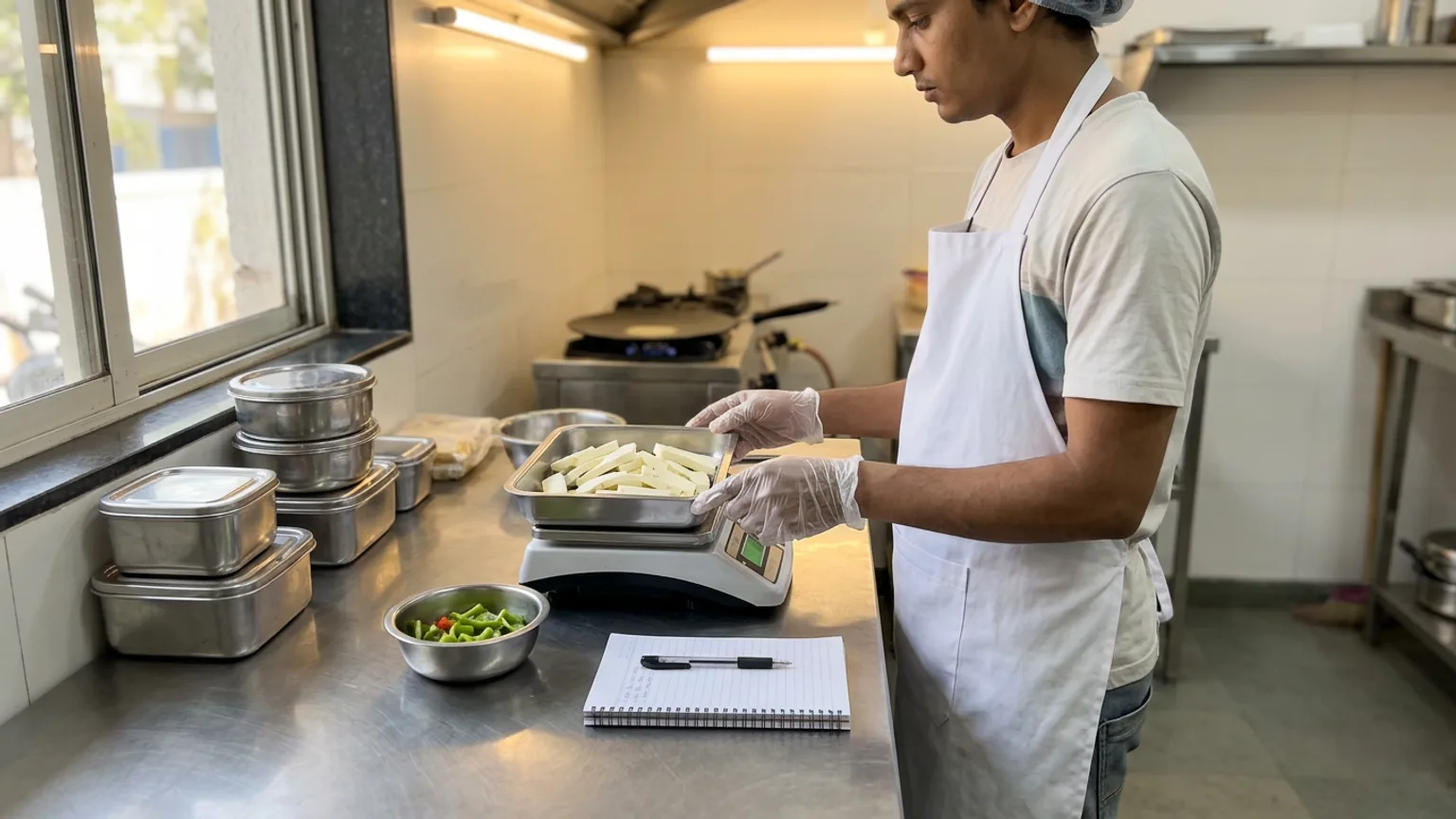
Fix portions with a scale and a scoop
Give the kitchen one measure for the cheese, the rice, the gravy. It also keeps taste the same from cook to cook.
Reprice, do not shrink
If a dish costs 38% to make, a ₹10 rise often hurts less than a smaller plate that customers notice.
Record every bit of waste
A simple list of what was thrown out and why shows you which items you over-prepare.
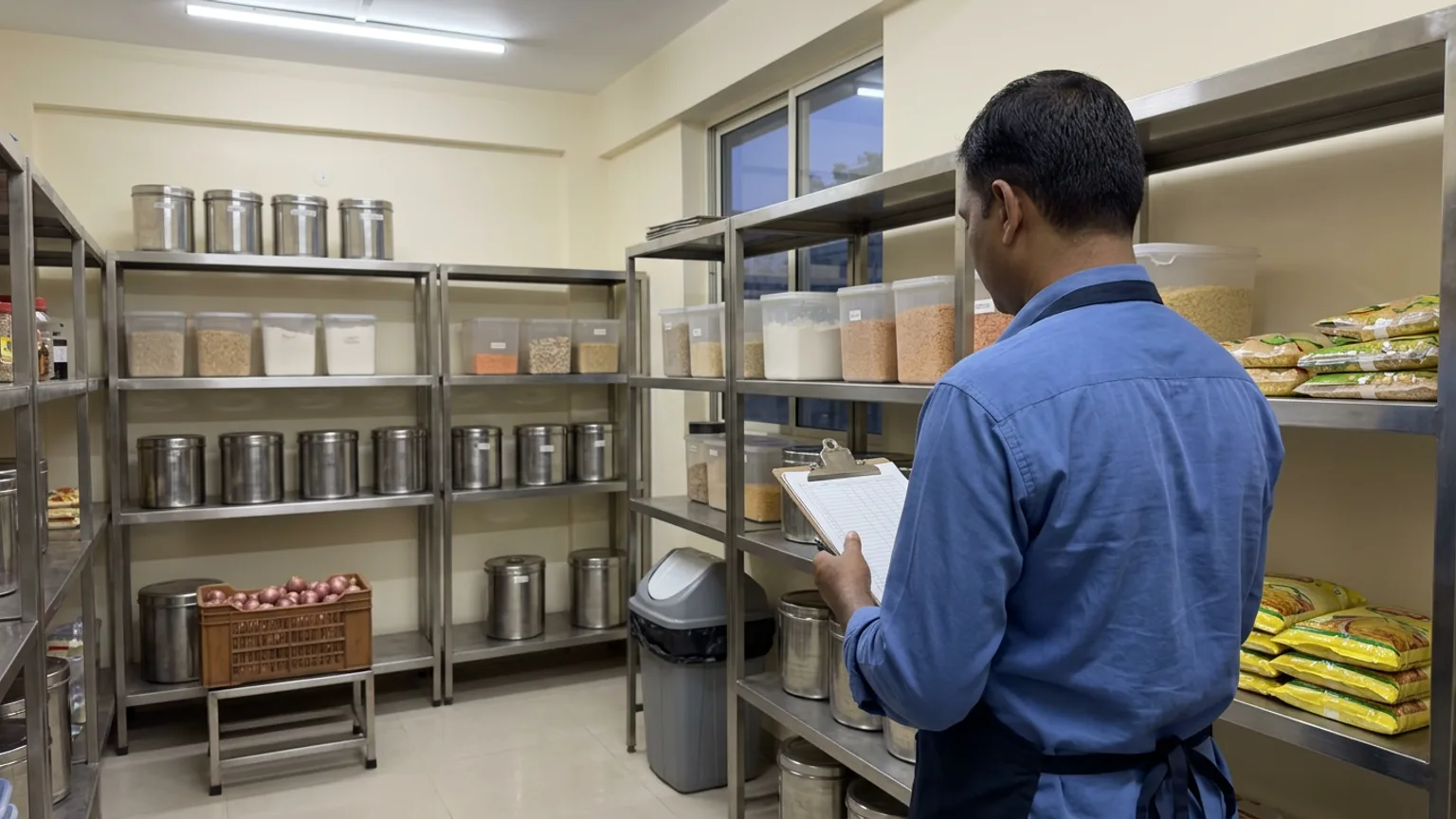
Count the shelf every week
Count a short list of your costliest ingredients weekly, not just once a month. You catch a leak while it is small.
Where KioSnap fits
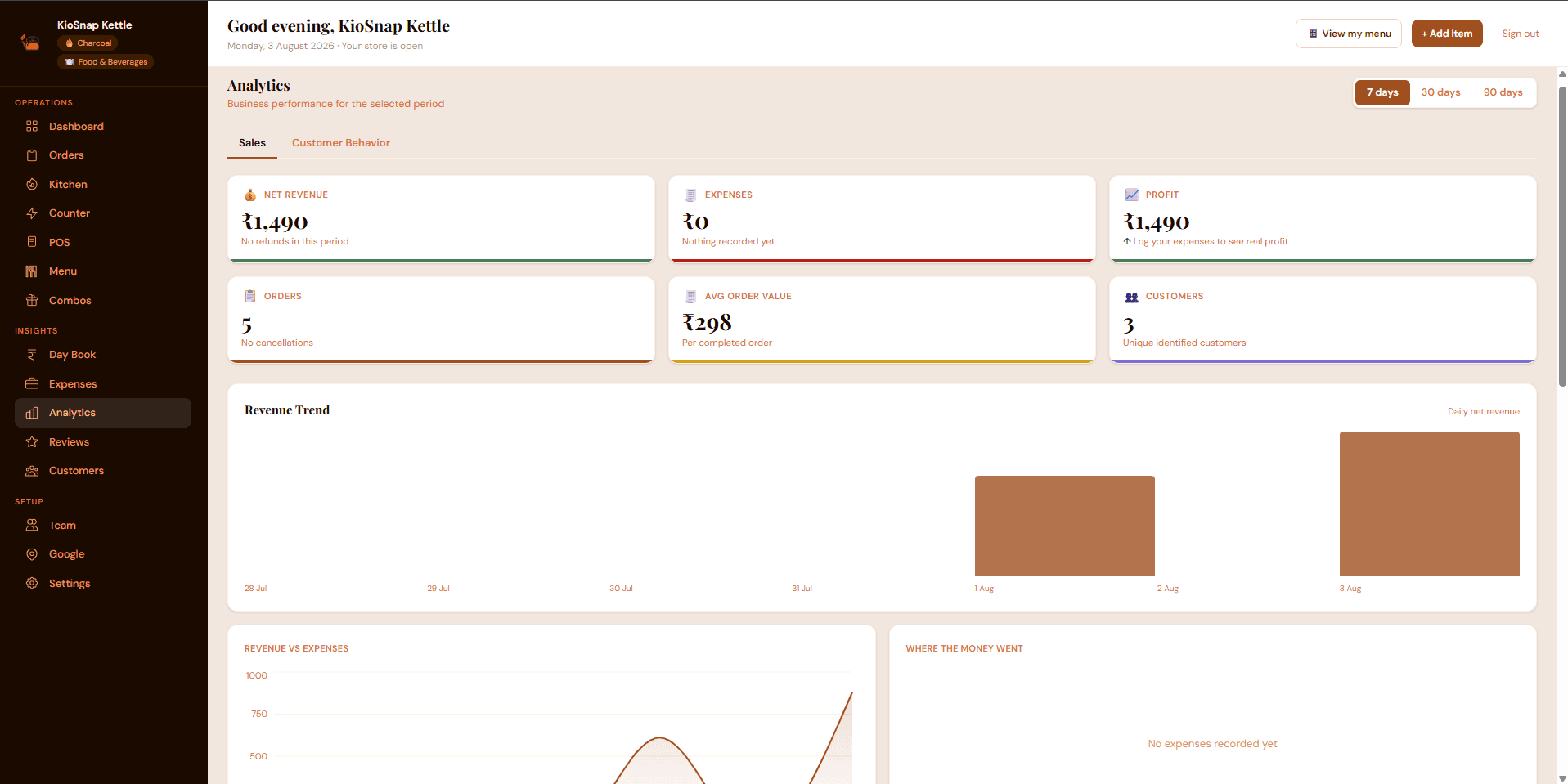
A notebook and a calculator are enough to start. When you are doing this every week, KioSnap can carry the arithmetic. Add a recipe to an item (what one sale uses of each ingredient), and the item shows what it costs to make, what it sells for and its margin. Each order then takes its ingredients off the shelf on its own, and the Food cost report shows your food cost as a share of sales, plus anything your counts found missing.
Recipes and the Food cost report are on the Gas plan (₹599 a month) and above, after a 14-day free trial and a one-time ₹199 setup. Stock counts come with Charcoal (₹299 a month) and above. Waste and the stock ledger are on every plan, including the free one. See the stock guide and the pricing page.
The short version
Cost one plate, check one month, and compare the two. Aim for a range that suits your kind of restaurant, find the gap, and fix the biggest sellers first. If you also want to spot slow items and busy hours, read how to increase average order value at your café next.
Common questions
What is a good food cost percentage for a restaurant in India?
Industry guides roughly put it at 28% to 35% of sales, lower for quick-service counters and cloud kitchens. It is a rule of thumb, not a standard, so judge it against your own margins.
How do I calculate food cost percentage?
For one dish, divide the ingredient cost of a plate by its selling price and multiply by 100. For a month, add purchases to opening stock, subtract closing stock, then divide by sales.
Should I include GST when I work out food cost?
No. Work on sales before GST. If your menu prices already include GST, divide by 1.05 for the 5% rate before you calculate.
Do I include packing and gas in food cost?
Many owners include packing in each dish's cost, especially for takeaway. Gas is usually counted as an overhead, but note it, because it still has to be covered by your price.
Does KioSnap calculate food cost for me?
Yes, on the Gas plan and above. You add a recipe to each item, and the Food cost report shows sales, ingredients used and your food cost as a share of sales.
Put this into practice today
Create your free storefront in minutes. No app for your customers, zero commission on your sales.