New Year's Eve Restaurant Checklist: Prepare for the Rush
8 min read
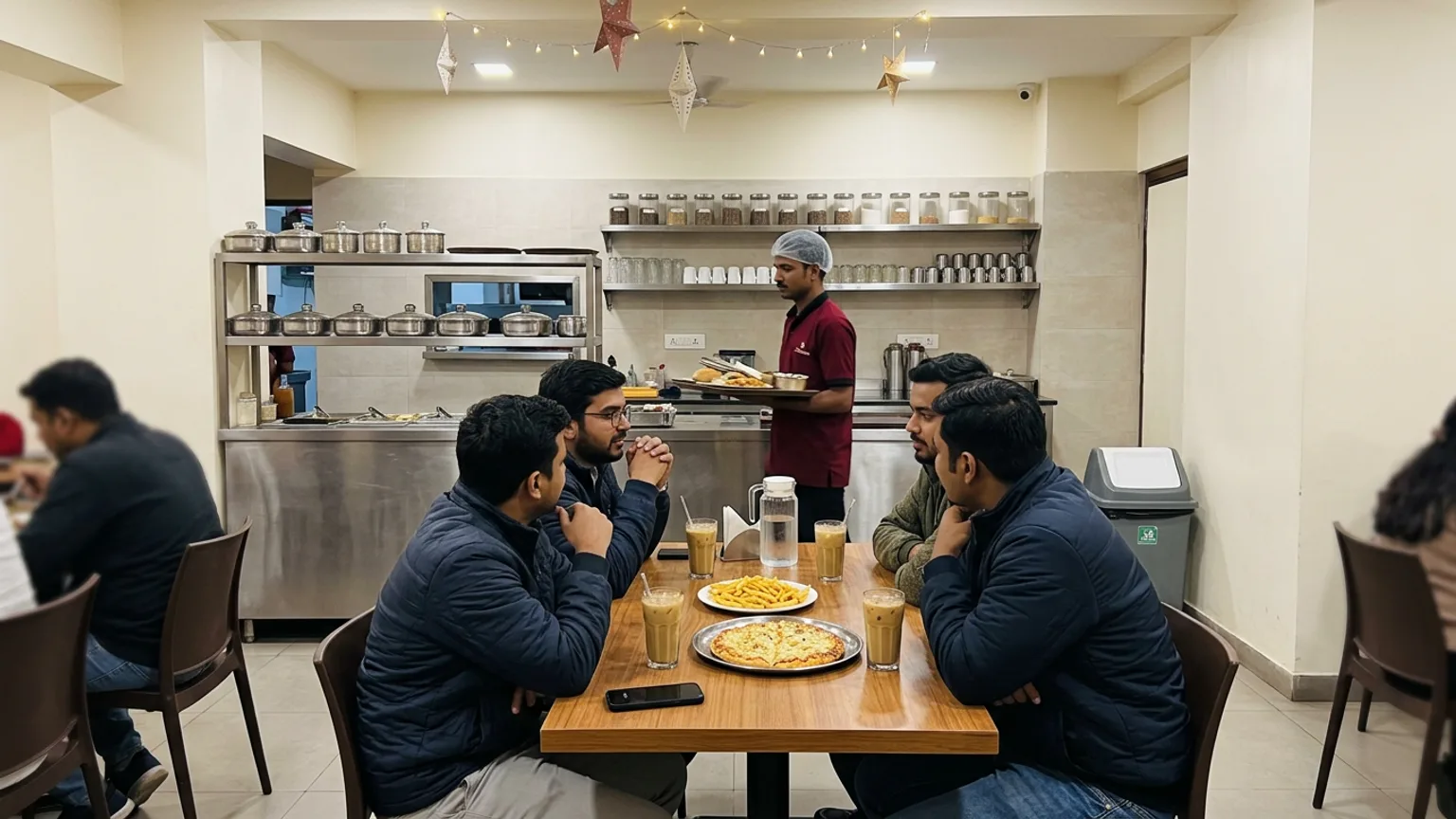
31 December is the one night when your usual Thursday turns into a Saturday and a half. You have seen it: tables full by seven, a queue at the counter, a kitchen printing tickets faster than anyone can read them. This New Year's Eve restaurant checklist is for Indian café and restaurant owners who want that night to be remembered for the food, not the wait.
It is written for 31 December 2026, which falls on a Thursday, so you have about ten weeks. Most of the work is done in the last fortnight, but the decisions that matter most (menu, staff, how orders reach the kitchen) are easiest to make now.
What New Year's Eve does to a kitchen
The crowd is not just bigger, it is shaped differently. People arrive in groups of four to eight, they all want to eat in the same two-hour window, and they order what is easy to share. Swiggy reported that on New Year's Eve 2025 biryani peaked at roughly 1,336 orders a minute just before 8 pm, with pizza and burgers close behind, according to Storyboard18. Those figures come from delivery, but the pattern holds in your dining room: comfort food, shared plates, and one big spike around dinner time.
- One peak, not a spread. Most covers arrive inside a window of two to three hours.
- Larger parties. One table can mean ten dishes and one bill that gets argued over.
- Less patience. Nobody wants to miss midnight because the food is late.
- Thin staffing. Some of your team are on leave, and the rest are working a long shift.
Six weeks out: decide the menu
A full menu on a night like this is a liability. Every extra dish needs its own prep, its own pan and its own memory in the head of a cook who is already stretched. Cut the menu to what you can cook well at three times your normal speed.
| Keep | Drop for the night |
|---|---|
| Dishes that sell every week and share well (biryani, pizza, fries, wraps, platters) | Dishes that need a cook's full attention for ten minutes |
| Items made from prep you can finish in the afternoon | Anything with a long list of one-off ingredients |
| A few higher-priced combos for groups | Single plates that only suit a table of one |
| Drinks that pour quickly | Complicated drinks that need three steps each |
Two weeks out: staff, stock and the rota
- Fix the rota now. Ask who cannot work on 31 December today, not on the 30th. Add one extra person for the counter and one for the floor.
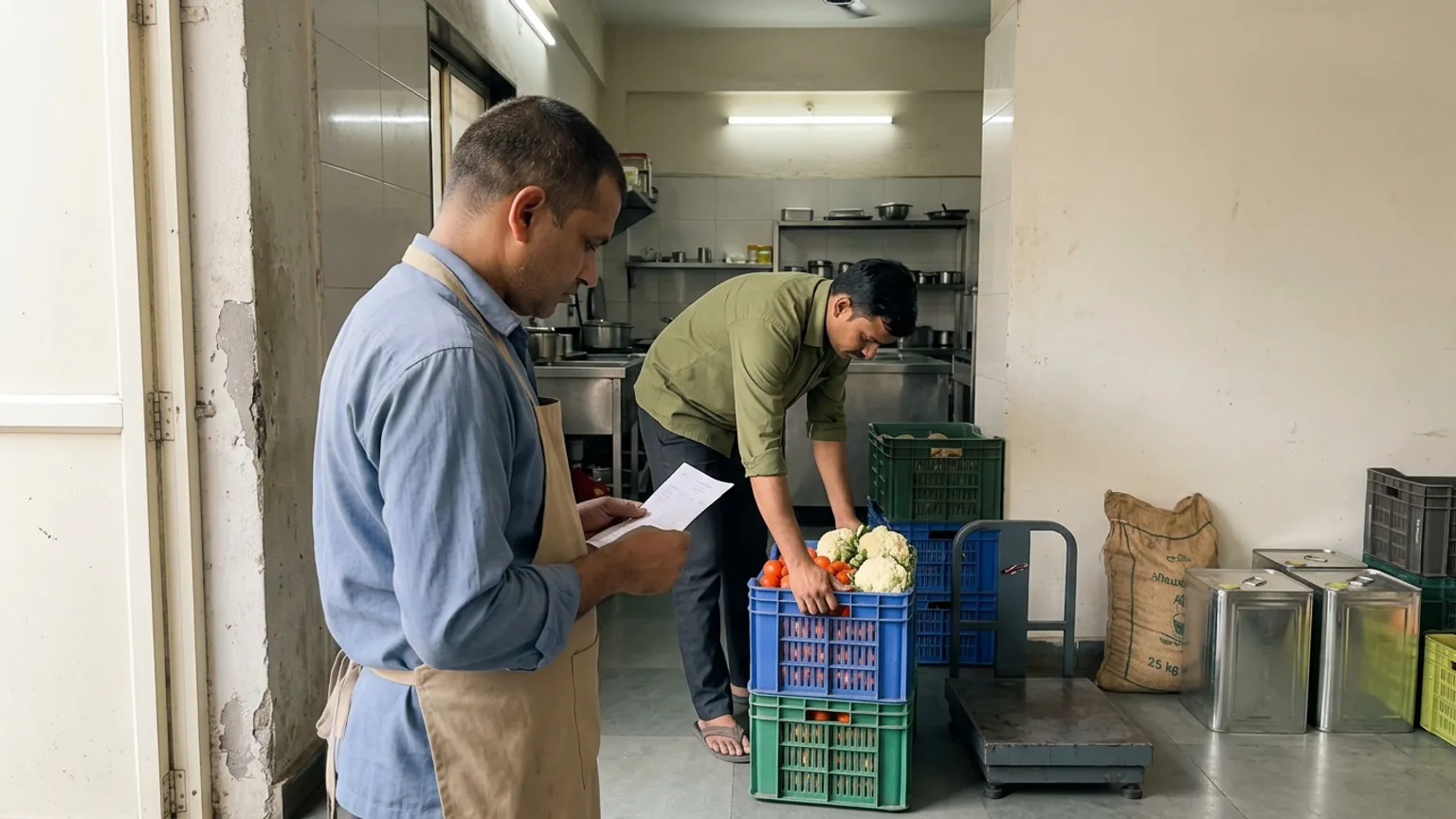
- Order stock for the shortened menu, with a day of buffer. Running out of the one dish everybody wants costs more than a little waste.
- Test your equipment. The fryer, the oven, the printer and the Wi-Fi each fail at exactly the wrong moment, so check each one this month.
- Brief the team once, in writing. Who takes orders, who cooks, who hands over, and who is allowed to say no to a new party when the kitchen is full.
- Decide your closing time and say it out loud to your staff. Many staff just want to know when they get home.
On the day: prep like the rush has already started
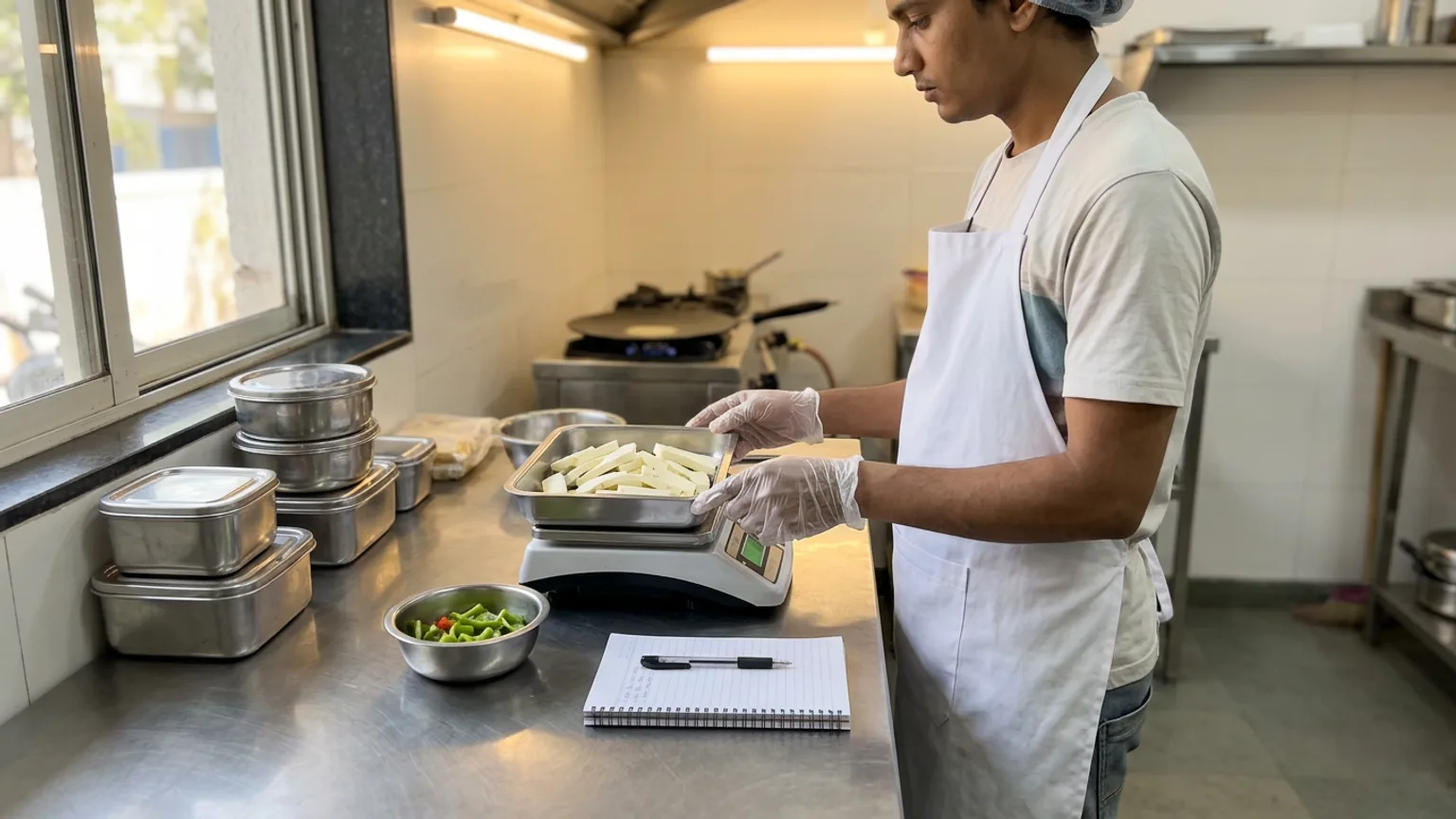
The cheapest speed in a kitchen is prep done before the first customer walks in. Aim to have the afternoon finished before five: everything chopped, marinated, portioned and labelled, every container lidded and in its place.
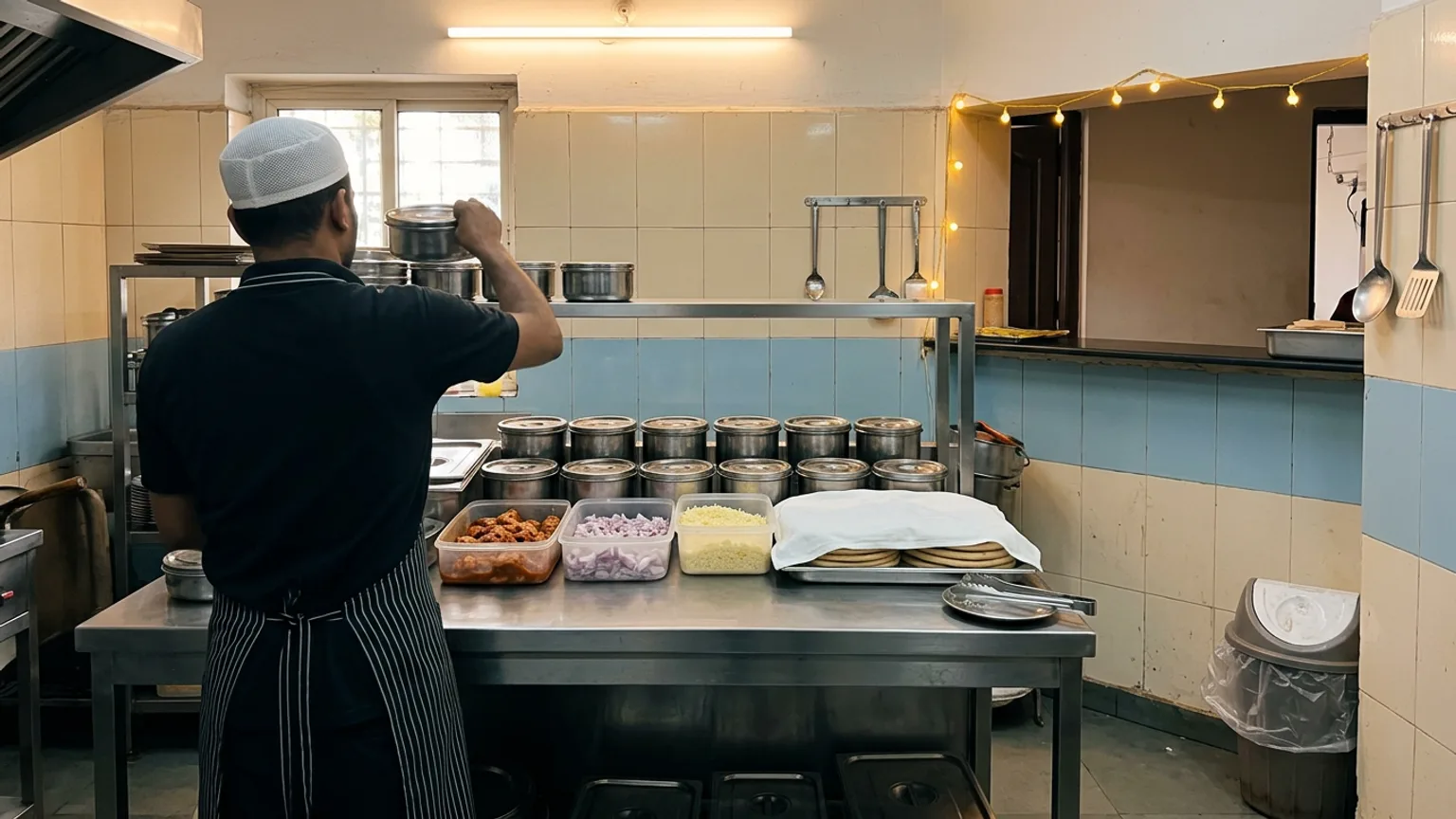
Portion the busiest dishes
Measure and box the marinade, sauce and toppings for the top five dishes by the batch, not by the order.
Stage the pass
Lay out plates, boxes, cutlery and napkins at the pass before service, so nobody leaves their station to look for a spoon.
Keep hygiene on the checklist
Caps or hairnets on, clean aprons, gloves or tongs for ready-to-eat food, and a wipe-down of every surface between rushes. A busy night is when this slips.
Set a no-new-dish rule
The menu is the menu until midnight. A single off-menu request in a rush costs more than the sale.
Name one person who calls the kitchen
One voice decides who is next. Two voices make a mess of the queue.
Take orders without a bottleneck
The usual breakdown on a big night is at the counter. One person takes the order, the money and the questions, and a queue builds that blocks the next customer from even seeing the menu. The cure is to let customers order from their own phones while they wait or sit.
This is what KioSnap is for. Customers scan the QR on your counter or table, see your menu with prices on their phone, and place the order, with no app to install. It arrives on your order board, and a new order keeps ringing until someone acknowledges it, so a busy night does not swallow one. See never miss an order.
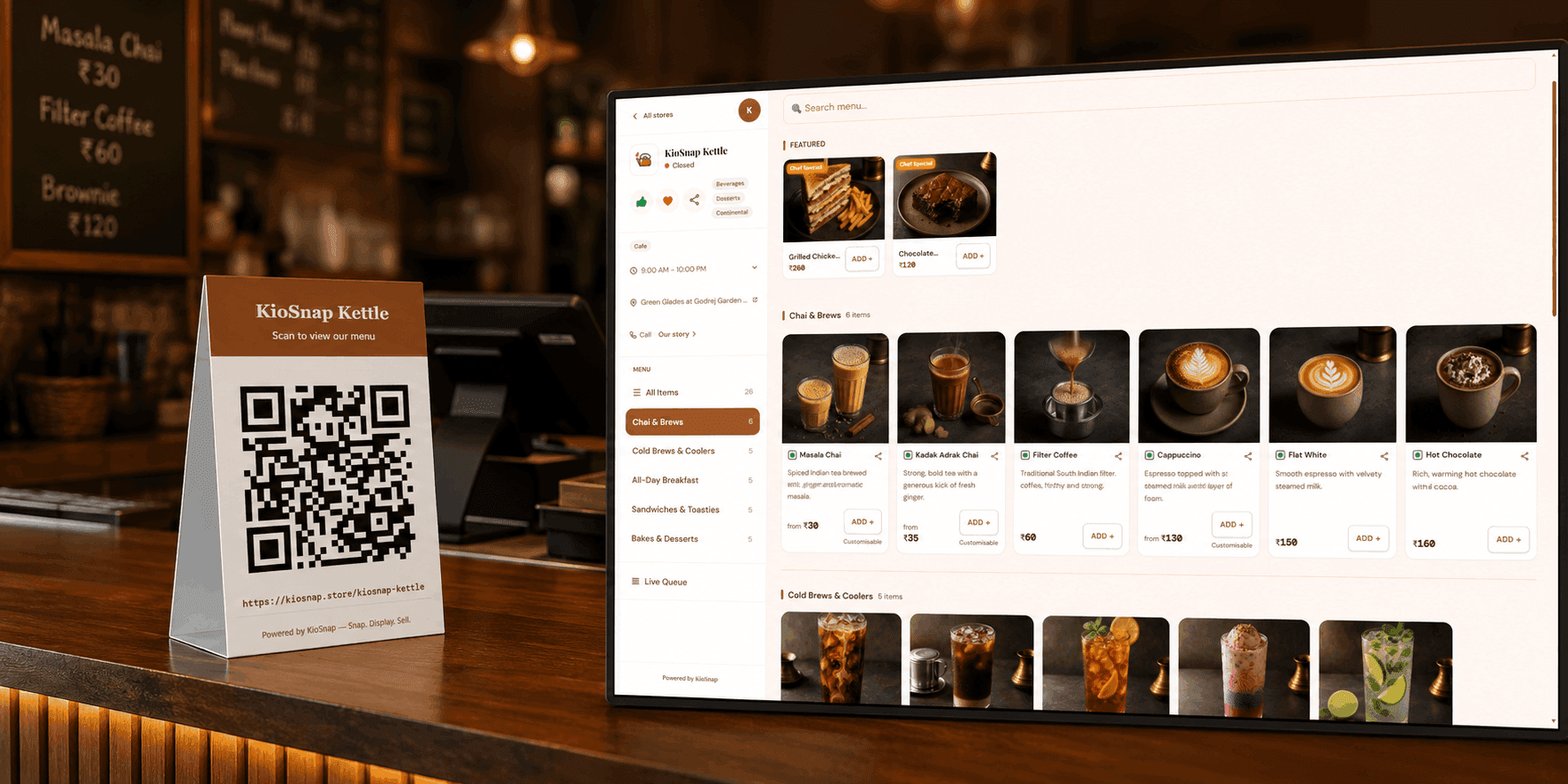
For New Year's Eve, a few things help:
- Show only tonight's menu. On Charcoal and above, Today's Board lets you pick the night's line-up out of your full catalog, so guests see eight items, not eighty.
- Put group combos on the menu so a table of six orders one platter instead of fifteen separate items. See create combo offers.
- Use the kitchen board. Orders move from placed to preparing to ready, so cooks work from one list instead of shouted tickets. See manage live orders.
- Keep the POS for walk-ins, so the counter can still bill someone who does not want to scan. See take orders with POS.
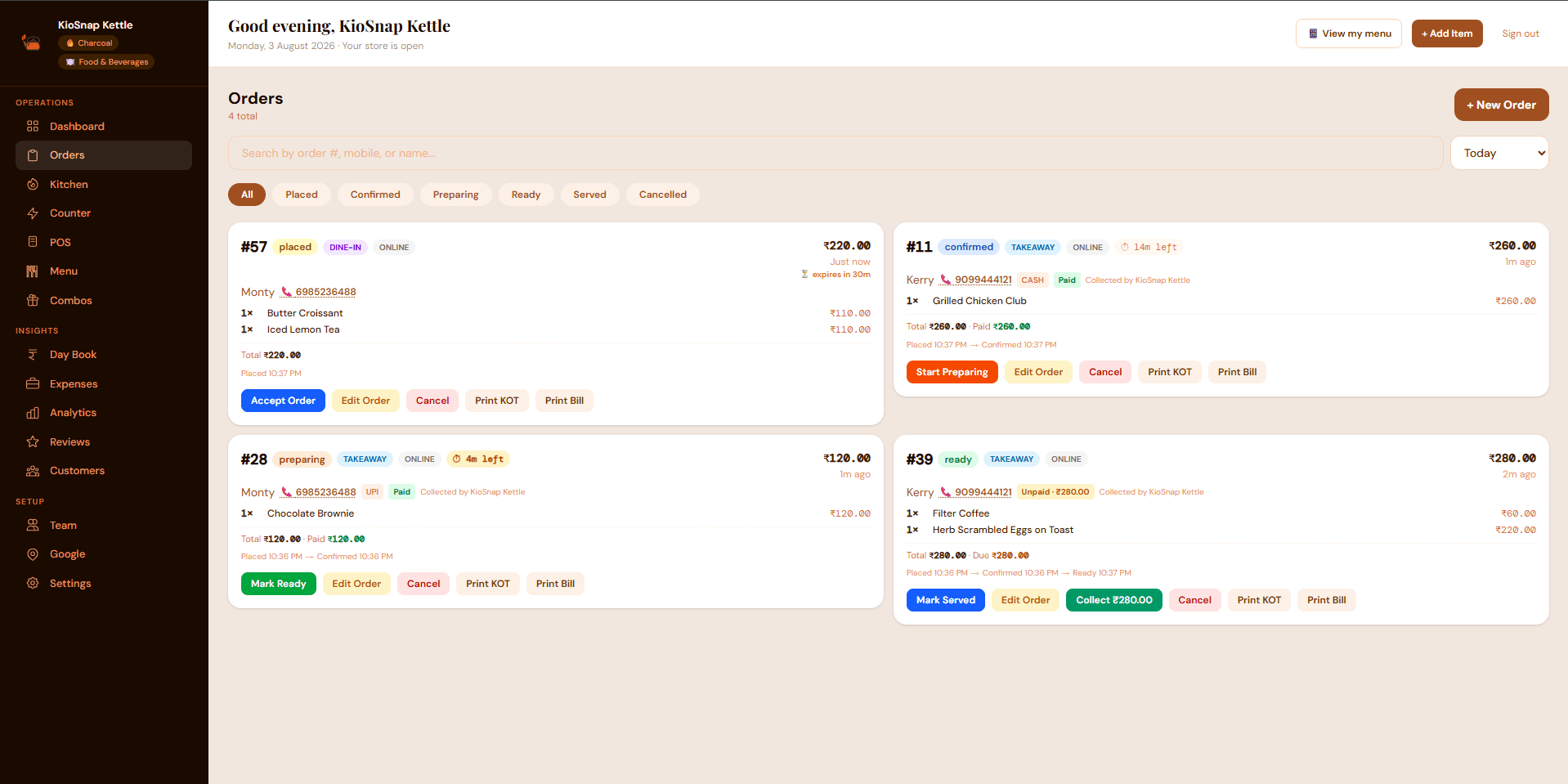
If you serve at tables, table management on the Gas plan and above opens a bill per table and lets the floor team add rounds to it. See dine-in tables and QR. Customers pay you directly, in cash or on your own UPI QR; KioSnap does not process the payment and takes no commission.
Run the night
- Watch the board, not the door. The kitchen's pace tells you when to pause walk-ins, not the length of the queue.
- Quote honest waits. Tell a new party the real time. A truthful twenty minutes beats a promised ten that becomes thirty.
- Keep the counter moving. Clear the pass, wipe the counter and refill the water between rushes, not after.
- Feed your team before the peak. A fed team keeps its temper at 9 pm.
- Keep a short list of what runs out, and take it off the menu the moment it does.
The morning after: close the books
The night is not over when the last table leaves. Count the cash, reconcile UPI against your bank app and write down what ran out first. The day book in KioSnap is where you close the day, so you are checking one record instead of adding up slips.
- to start, on the free plan
- ₹0
- a month to take orders
- ₹299
- free trial on paid plans
- 14 days
- commission on your sales
- 0%
Taking orders starts on the Charcoal plan at ₹299 a month after a 14-day free trial and a one-time ₹199 setup. The free Wood plan shows your menu on a QR but does not take orders. Table management starts on Gas at ₹599 a month. Full details are on the pricing page. If you set it up in November, you will have weeks of ordinary service to learn it on before the 31st.
The short version
Cut the menu, prep in the afternoon, rota early, and move ordering off the counter. Do those four things and 31 December becomes a night your team can run, not one it survives. Start the list this week.
Common questions
When should I start preparing for New Year's Eve at my restaurant?
About six weeks ahead for the menu and the rota, two weeks ahead for stock and equipment checks, and the afternoon of the 31st for prep. Late decisions on staff and stock cost the most.
Should I cut my menu on New Year's Eve?
Yes. A shorter menu of shareable dishes and group combos cooks faster and runs out less often. Keep the items you already sell every week, and drop anything that needs a cook's full attention.
How do I stop a queue at the counter on a busy night?
Let guests order from their own phones by scanning a QR at the counter or table. With KioSnap, orders reach your order board with a ringing alert, and the counter is free for walk-ins and payments.
Does KioSnap take payments from customers?
No. Customers pay you directly, in cash or through your own UPI. KioSnap does not hold your money and takes no commission on your sales.
Which KioSnap plan do I need for a busy restaurant?
Order management, with the order board, POS and day book, starts on Charcoal at ₹299 a month. Table management for dine-in bills starts on Gas at ₹599 a month.
Put this into practice today
Create your free storefront in minutes. No app for your customers, zero commission on your sales.