Winter Menu for Your Café: A Plan for the Cold Months
7 min read
The first cool evening changes what people order. Cold coffee slows down, and people start asking for something hot and filling. A winter menu for your café is how you answer that before the rush, not after. Plan it now and it is ready for the weeks ahead: Diwali on 8 November, wedding crowds, the December holidays and New Year's Eve.
This guide gives you a simple way to plan one: what to keep, what to rotate, how to price new items, and how to switch the menu on without reprinting a single card.
Rotate a part of the menu, not the whole of it
A winter menu is not a new café. Your regulars come for items they know, and your kitchen is fast at the dishes it makes every day. One Indian trade article on seasonal menus suggests changing roughly 20 to 30 percent of the offering each season and keeping the rest steady, and that is a sensible place to start (Restaurant India).
For a café with 40 items, that means 8 to 12 winter items. Sort your current menu into three piles before you add anything:
| Pile | What goes in it | What to do |
|---|---|---|
| Keep always | Your bestsellers and the items regulars would complain about losing | Leave them exactly where they are |
| Pause for winter | Iced drinks, cold coffees, smoothies and anything that sold slowly last December | Hide them, do not delete them. They come back in March |
| Add for winter | Hot drinks, soups, warm bakes and one or two filling plates | Start with the items your kitchen can already make well |
What sells in a cold-weather café
Look at what Indian cafés and chains put on their winter menus and a pattern shows. It is warm drinks first, then soups, then comfort food with an Indian twist. Roundups of winter menus in Curly Tales point to gajar halwa cheesecake and chai tiramisu, and chains such as Barista add seasonal lattes and hot beverages. You do not need to copy them. You need two or three items per group that suit your kitchen and your customers.
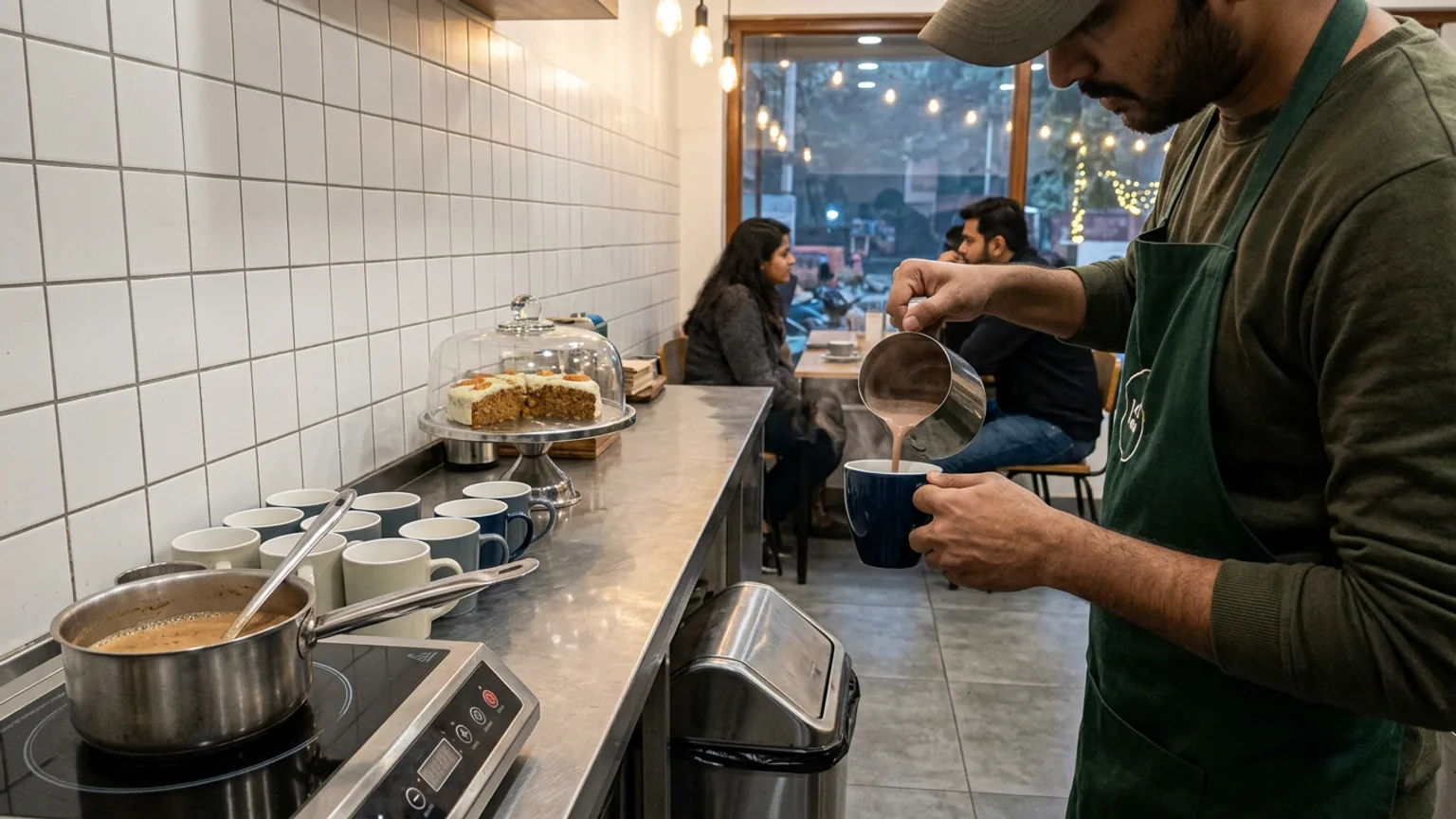
- Hot drinks. Hot chocolate, masala chai, a spiced latte, kahwa or a cinnamon coffee. They cost little to make and they are the first thing people order when it turns cold.
- One soup and one toast. Tomato, sweet corn or mushroom soup with a buttered toast. It is quick, it fills, and it sits well with a drink.
- A warm dessert. Gajar halwa, a brownie with a hot sauce, or a warm cake slice. Winter is the one season customers happily order dessert with a hot drink.
- One filling plate. A pav bhaji toast, a baked pasta or a loaded sandwich, depending on what your kitchen is set up to do.
- A festive item or two. Something with nolen gur, dry fruits or jaggery if it fits your area. Customers read these as a reason to visit now.
Price it so the margin survives winter
New items are where margins go wrong, because you have no sales history to check them against. Industry write-ups put restaurant food cost in India at roughly 28 to 35 percent of revenue; treat that as a rough guide and work from your own numbers.
Cost every winter item
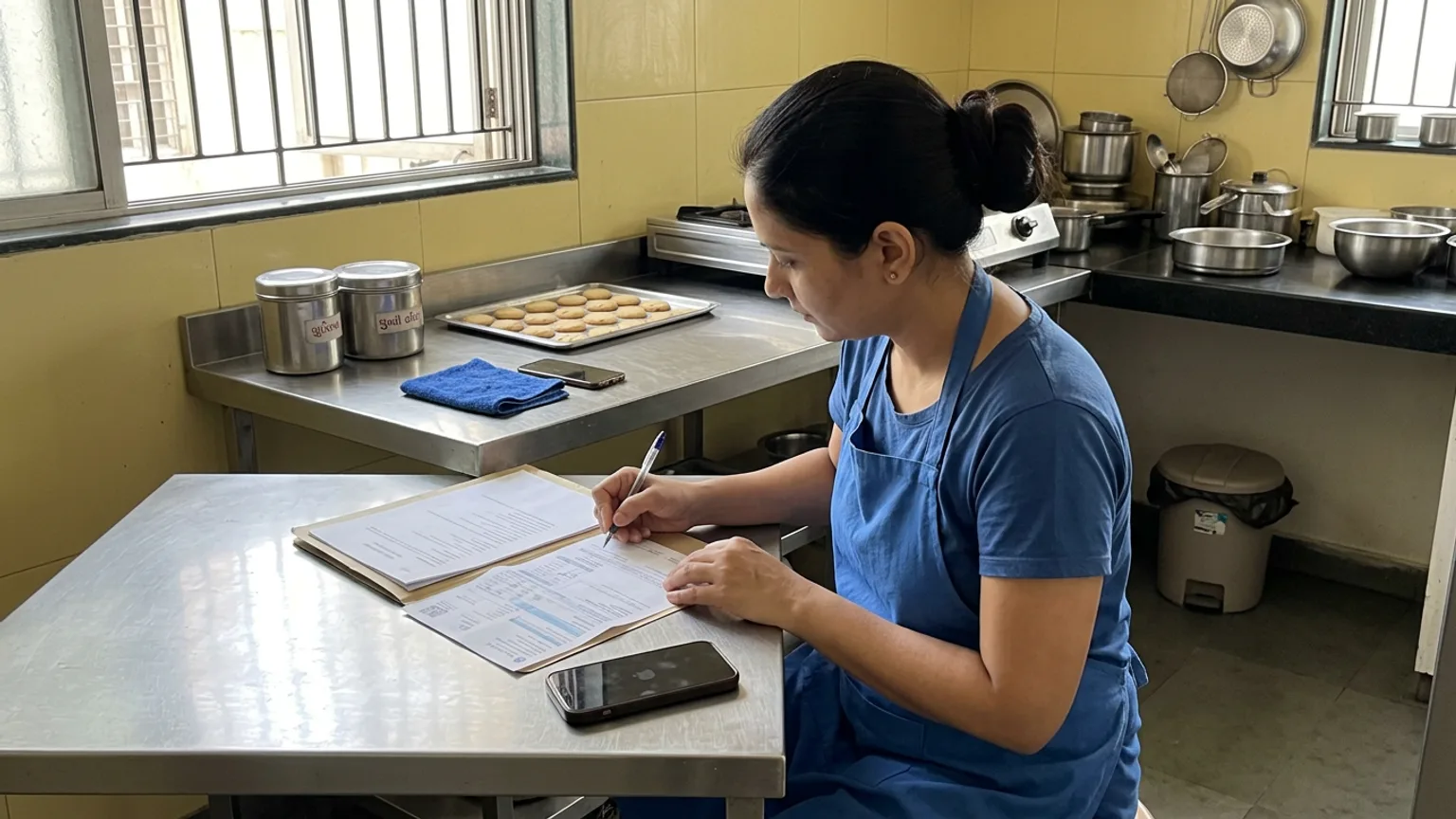
Add up the ingredients, the packaging and the gas for one serving. Include the cream, the garnish and the toast.
Set the price from the cost
Decide the share of the price you want the ingredients to be, and divide the cost by it. Then round to a price a customer finds easy.
Pair each new item with something
A soup with toast, a hot chocolate with a brownie. A pair sells more than two single items and gives you a combo.
Test before you commit
Run the item for two weeks. Keep it if it sells, change it if it sells slowly, and drop it if it does not sell at all.
Switch the menu on without reprinting it
A printed card is the slowest part of a menu change. By the time a new one is designed, printed and laminated, half the cold weeks are gone, and a price change means starting again. A menu that lives on a phone can change in a few minutes.
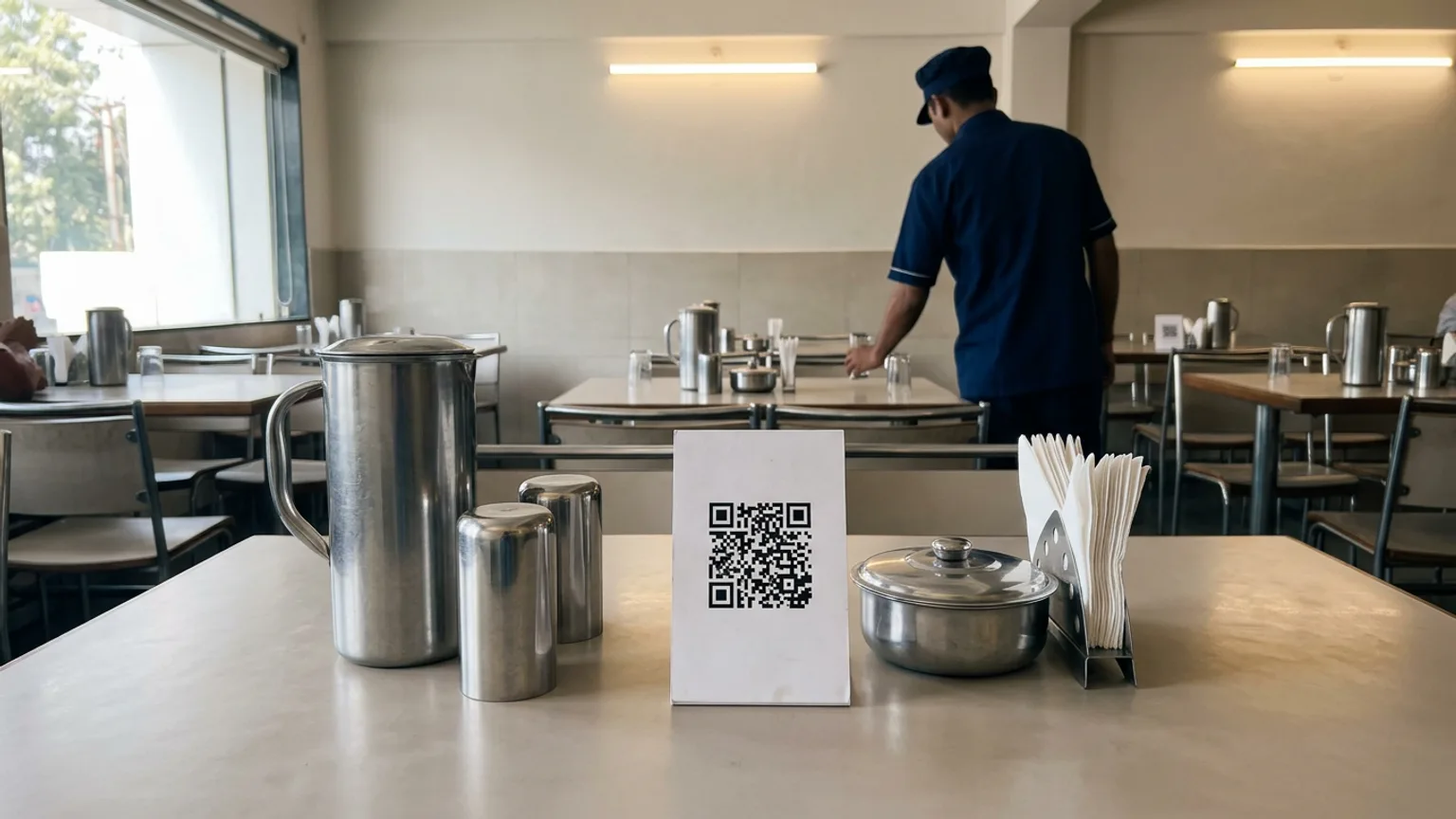
On KioSnap, customers scan the QR on your counter or tables and open your menu on their own phone. There is no app for them to install. To add your winter range:
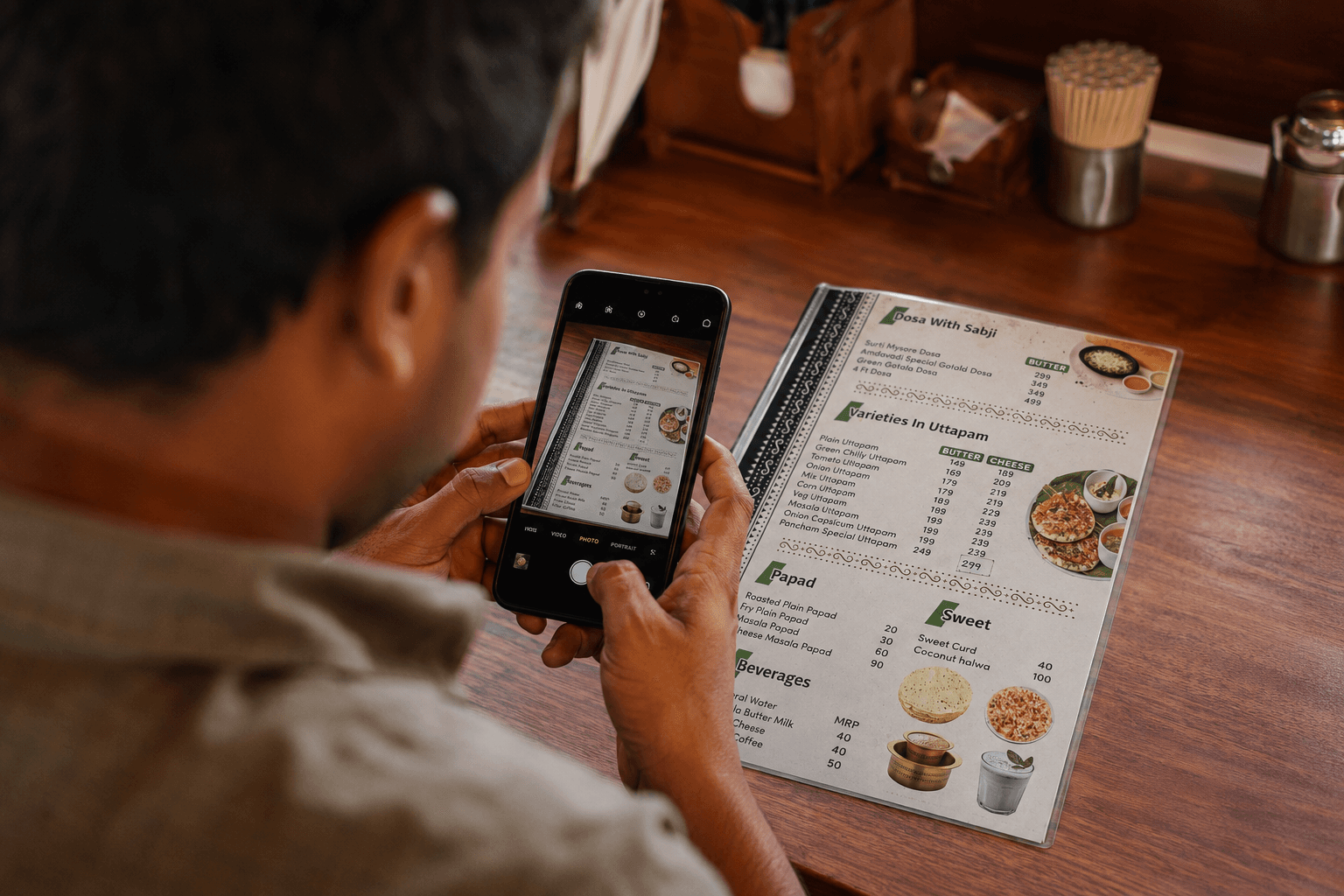
- Add the new items. Type them in, or photograph your updated price list and let the AI read it for you. See scan your menu with AI.
- Hide the cold items by switching them to unavailable, instead of deleting them, so they are one tap away in spring.
- Bundle the pairs as combos, such as a soup and toast, or a hot chocolate and a brownie. See create combo offers.
- Show only some items on some days if you want a winter special that appears on weekends only. Day-wise menu is on Gas and above; see show different items on different days.
Combos start on the Charcoal plan at ₹299 a month, after a 14-day free trial and a one-time ₹199 setup, with 5 active combos. Gas, at ₹599 a month, adds table QR ordering and day-wise menu with 10 combos, and Solar has no limit on items or combos. The free Wood plan holds three items, which is enough to see your storefront live but not a winter menu. KioSnap takes no commission on your sales, and customers pay you directly. Compare the plans on the pricing page.
Prepare the kitchen, not only the card
A menu you cannot cook at speed hurts you more than a short one. Before you launch, walk through the kitchen with the new items in mind.
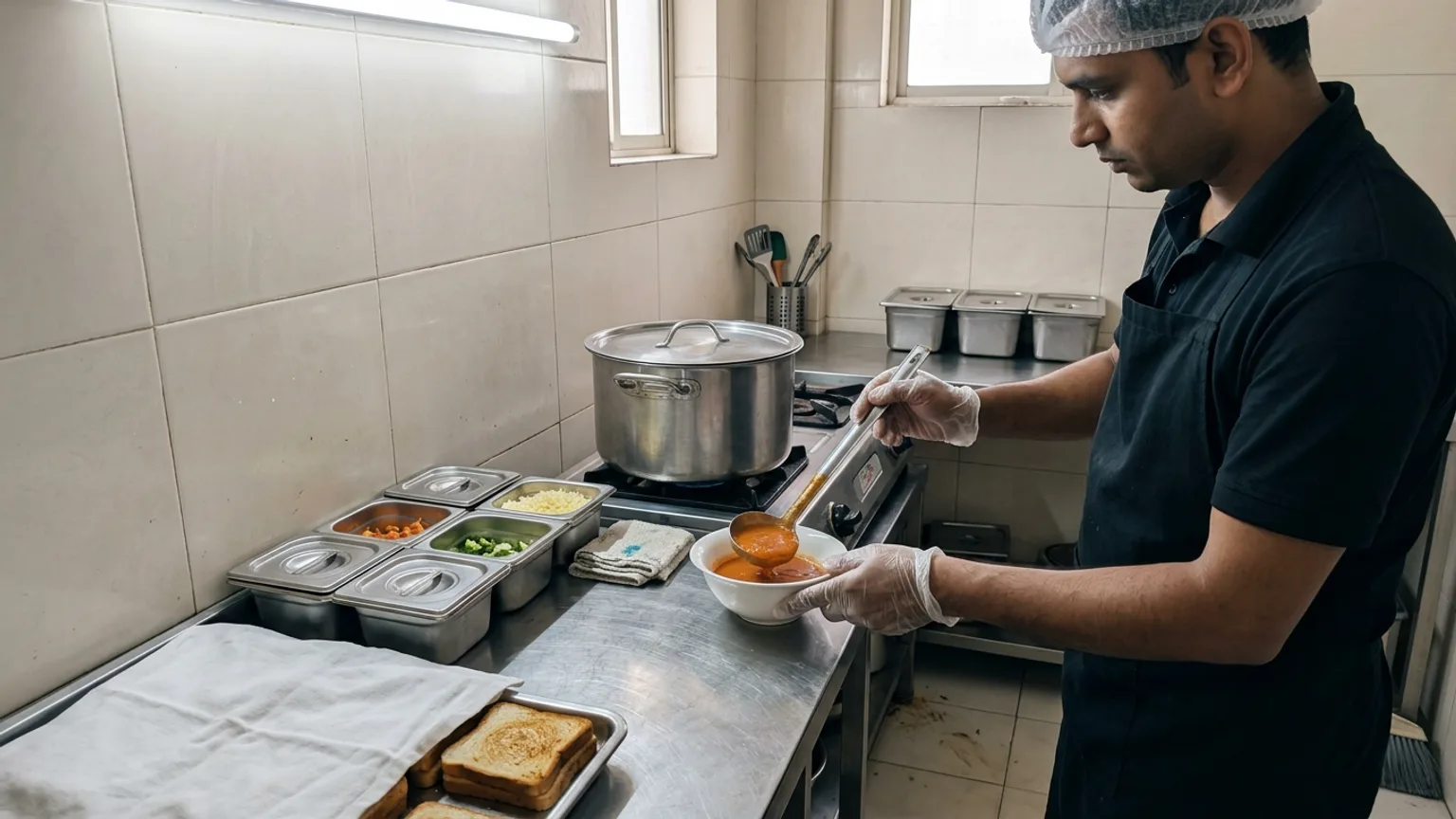
- Prep what you can the day before. Soup bases and sauces keep well when they are cooled, covered and stored properly.
- Share ingredients across items. A tomato base serves the soup, the pasta and the toast; a new ingredient for one dish is a risk.
- Keep hot food hot and covered, and keep ready-to-eat food handled with tongs or gloves.
- Tell the counter team what is new, what it costs and what goes with it, so they can answer in one sentence.
Read the numbers after two weeks
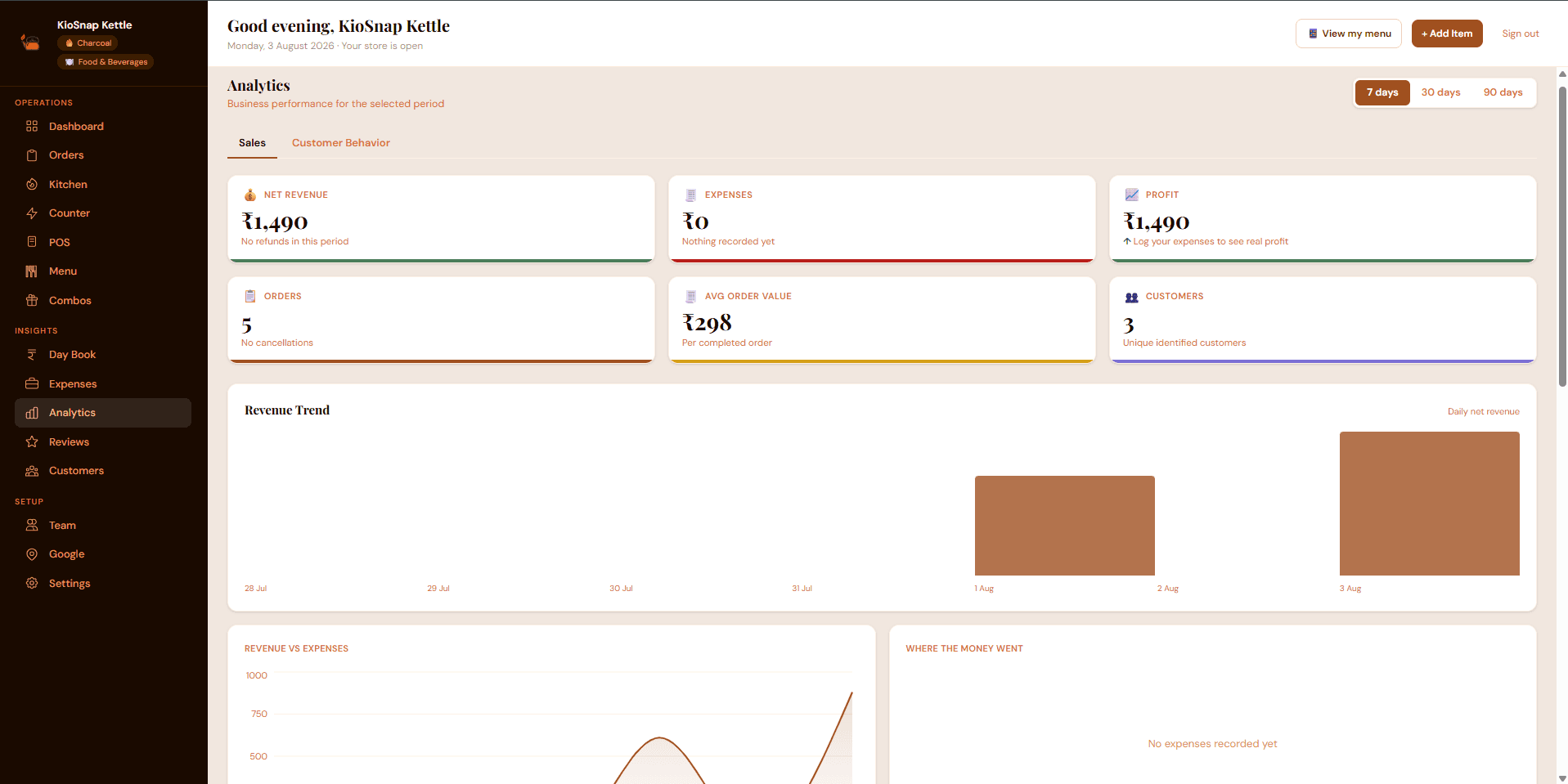
A winter menu is a test. After two weeks, look at which new items sold, which sold with a drink, and what happened to your average bill. Keep the winners, rework the middle and drop the rest.
- winter items for a 40-item café
- 8-12
- before you judge a new item
- 2 weeks
- commission on your sales
- 0%
- free trial on paid plans
- 14 days
The short version
Keep your bestsellers, pause the cold drinks, and add a small set of hot drinks, a soup and a warm dessert. Cost each one, pair it with something, and put it on a menu you can change from your phone. Two weeks in, let the sales tell you which ones stay.
Common questions
When should a café launch its winter menu in India?
Start planning in October and launch when the evenings turn cool, usually in November in most of north and central India. In warmer cities, a smaller hot-drinks range from December is enough.
How many items should a winter menu have?
Rotate roughly 20 to 30 percent of your menu. For a café with about 40 items, that is 8 to 12 new winter items, and the rest of the menu stays as it is.
Can I hide my cold drinks in winter without deleting them?
Yes. On KioSnap you can switch an item to unavailable and bring it back later, so nothing needs to be typed in again in spring.
Do I need to reprint my menu card for a winter menu?
Not if customers order from a QR code. The QR stays the same and the menu behind it updates when you change an item, so there is nothing to reprint.
Put this into practice today
Create your free storefront in minutes. No app for your customers, zero commission on your sales.