How to Start a Food Stall Business in India: 2026 Guide
9 min read
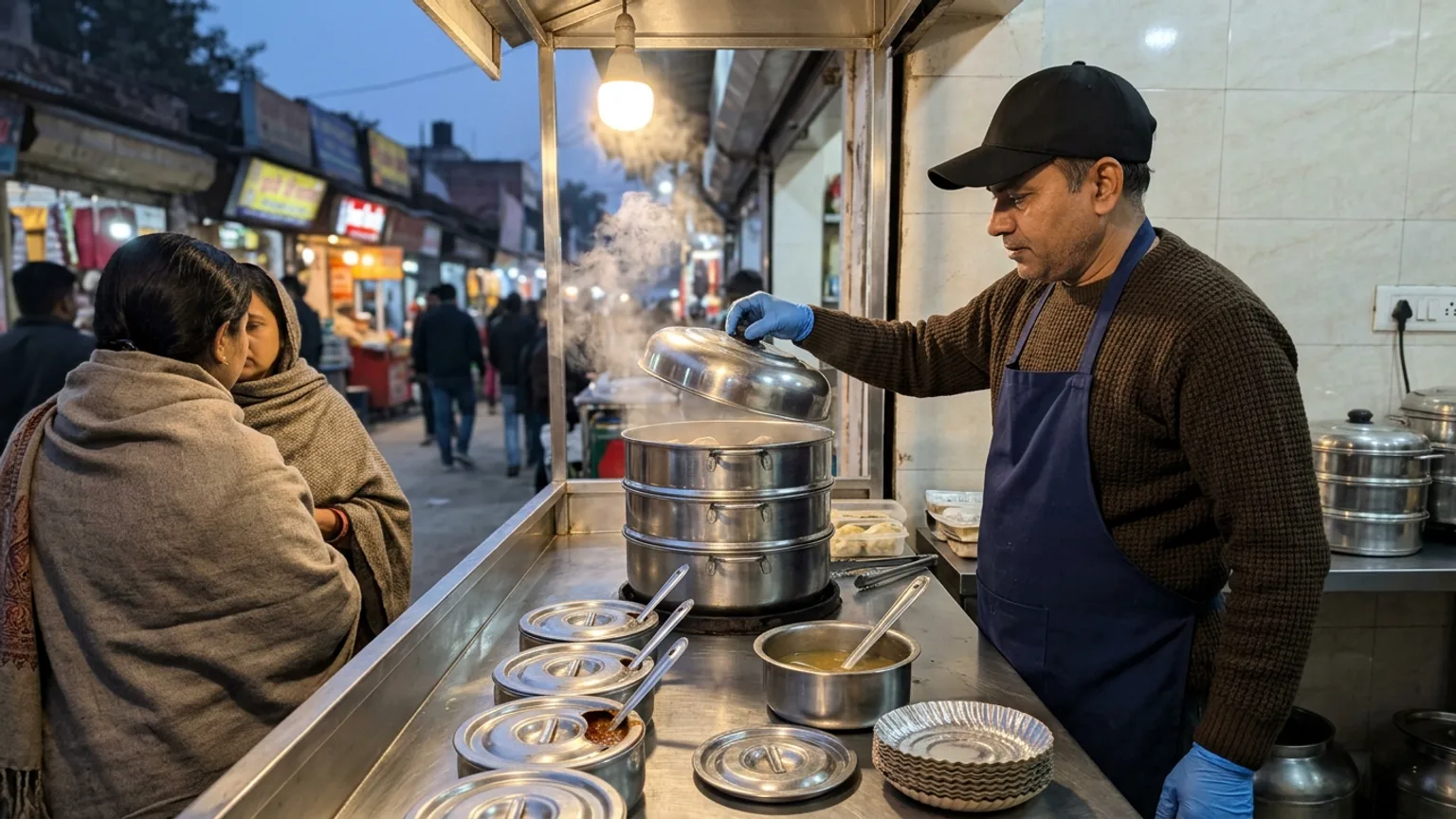
Most people who ask how to start a food stall business already know what they want to cook. What they do not know is where to stand, what to put on the menu on day one, which papers they need, and how much money to keep aside before the first plate sells. Get those four right and the cooking can do its job.
This guide walks through each of them in the order you will face them, with the licence rules as they stand after FSSAI's 2026 changes. It also explains why the weeks between now and January are a good time to open: cold evenings bring people out for something hot, and the wedding season fills markets and lanes after dark.
Pick the spot before you pick the recipe
A good dish in a dead lane sells nothing. Your location decides who walks past, at what hour, and how much they will pay, so choose it first and let it shape the menu.
| Kind of spot | When it is busy | What sells |
|---|---|---|
| Office clusters and IT parks | Lunch and the evening exit | Fast, filling plates under five minutes: rolls, rice bowls, chai and snacks |
| College gates and coaching areas | Afternoons and evenings | Low ticket, shareable items: momos, maggi, chaat, cold coffee in summer |
| Residential markets | Evenings and weekends | Family plates, parcels to take home, sweets |
| Bus stands, stations, hospital gates | All day, in waves | Chai, breakfast, simple meals people can eat standing |
- Count people, not shops. Stand at the spot at the hour you plan to sell, three days in a row, and count how many people walk past in fifteen minutes.
- Talk to the vendors already there. Ask which evenings are busy and who manages the space. They usually know more than any listing.
- Check where people will stand. A stall that blocks a shop entrance or the road makes enemies on the first day.
- Look for water and light. You will need to wash hands and utensils, and you will be selling after dark.
Keep the first menu short
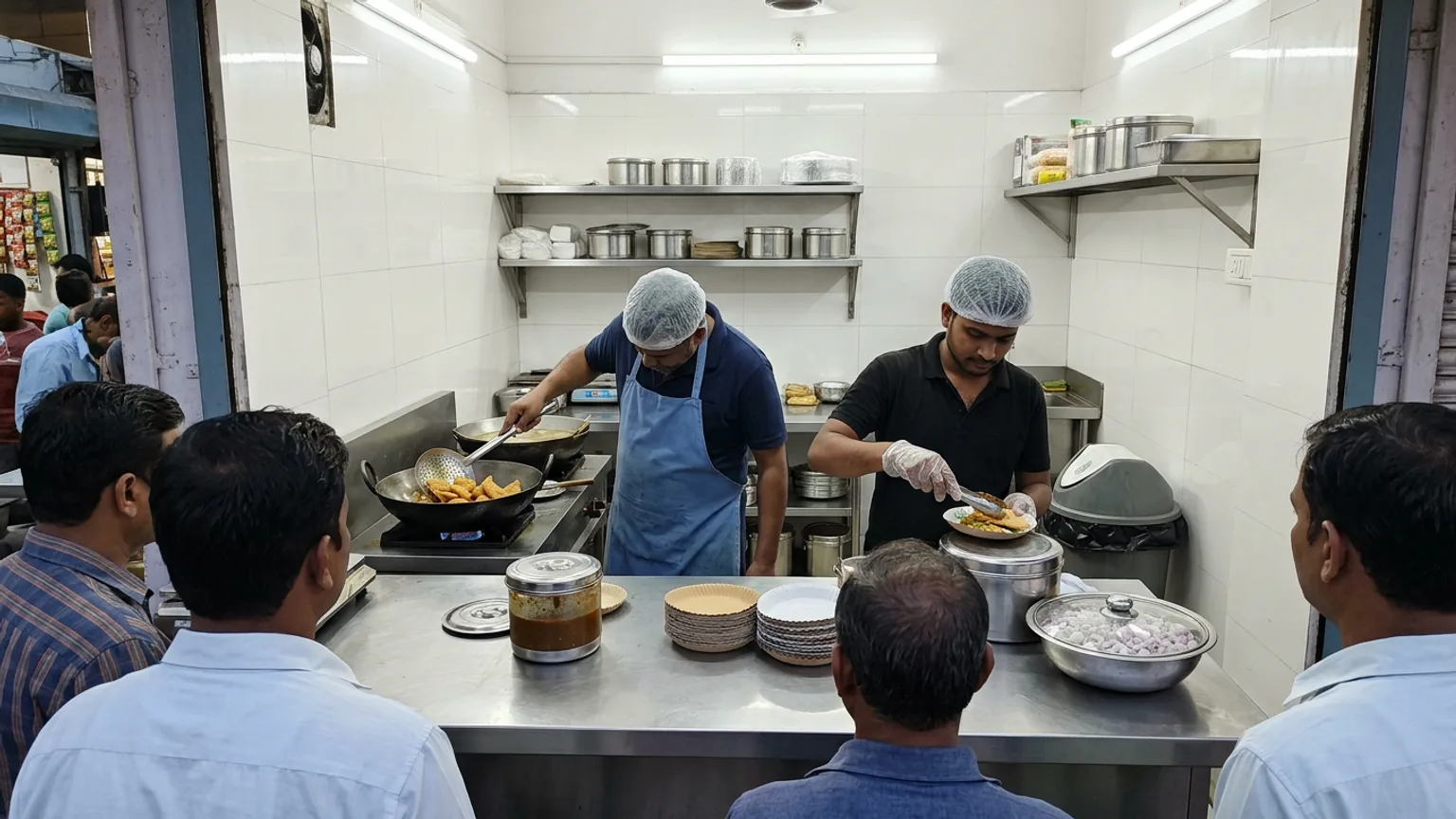
A stall has one or two people, one or two burners and very little storage. Every item you add costs prep time, ingredients that may go to waste and seconds at the counter while customers decide. Start with five to eight items you can make fast and well.
- One hero item that people come back for, in two or three sizes or fillings.
- One or two add-ons that cost little to make: a drink, a soup, an extra chutney or a sweet.
- Shared ingredients. Build the menu so the same filling, dough or gravy goes into several items.
- A winter line, now. Soups, chai, momos, roasted sweet potato and hot gajar halwa sell on cold evenings. Plan to swap them for cold drinks in March.
Price each item by working out what one plate costs you, not by copying the stall next door. Add up the ingredients for a batch, divide by the plates it makes, and add the plate, spoon and napkin. If a plate costs you ₹22 to make and you sell it for ₹50, you have ₹28 a plate to cover rent, gas, wages and your own pay. If that margin looks thin at the footfall you counted, change the recipe or the price before you open, not after.
The licences, after the 2026 FSSAI changes
Every food business in India needs FSSAI registration or a licence, and a stall is no exception. Two changes this year make it simpler for small stalls. From 1 April 2026, basic registration covers food businesses with a yearly turnover up to ₹1.5 crore, up from ₹12 lakh, according to FSSAI's order of 13 March 2026. Almost every stall falls well inside that.
The second change is for street vendors. Under the same amendment, as FSSAI's order of 27 March 2026 describes it, food vendors registered under the Street Vendors Act, 2014 (through the municipal corporation or the Town Vending Committee) are treated as registered with FSSAI, so they do not need a second registration. The hygiene rules still apply in full. If you are not on your town's vending list, apply for basic registration on FoSCoS yourself.
| Paper | Who needs it | Where to get it |
|---|---|---|
| FSSAI basic registration | Every food stall not already covered as a registered street vendor | FoSCoS portal, online |
| Street vending certificate | Stalls on public land, a pavement or a vending zone | Your municipal corporation or Town Vending Committee |
| Shop and establishment registration | A stall in a rented shop front, in many states | Your state's labour department portal |
| GST registration | Only once turnover crosses the GST threshold for your state | GST portal; check with an accountant |
Rules differ by city, so call your municipal office before you spend money on a cart. For the FoSCoS steps in detail, our guide to FSSAI registration for home bakers walks through the same application.
Work out the money before the first plate
Startup costs vary too much by city and food to trust one number from the internet. Make your own sheet with these lines, get two quotes for each, and keep at least a month of running costs aside, because the first weeks are slower than the ones after.
| One-time | Every month |
|---|---|
| Cart, counter or stall build | Rent or space fee |
| Burners, steamer, tawa and gas connection | Gas and electricity |
| Utensils and lidded storage containers | Ingredients |
| Licences and registration | Plates, cups, parcel boxes and napkins |
| Board, light and a printed QR | Helper's wages, if any |
If you are a street vendor short of capital, the government's PM SVANidhi scheme gives small working-capital loans in steps. After its restructuring, the first loan was raised to ₹15,000 and the second to ₹25,000, with a third of ₹50,000 for those who repay on time, as Business Standard reported. Check the current terms at your bank or urban local body before you count on it.
Run the first week as a test
Treat your first week as an experiment, not a launch. You are finding out which items sell, at which hour, and where the queue slows down.
Open with a smaller batch
Cook for the footfall you counted, not the crowd you hope for. Running out early on day two tells you more than throwing food away.
Write down every sale
Item, quantity, time and cash or UPI. Without it, you cannot tell your best seller from your favourite dish.
Close the day properly
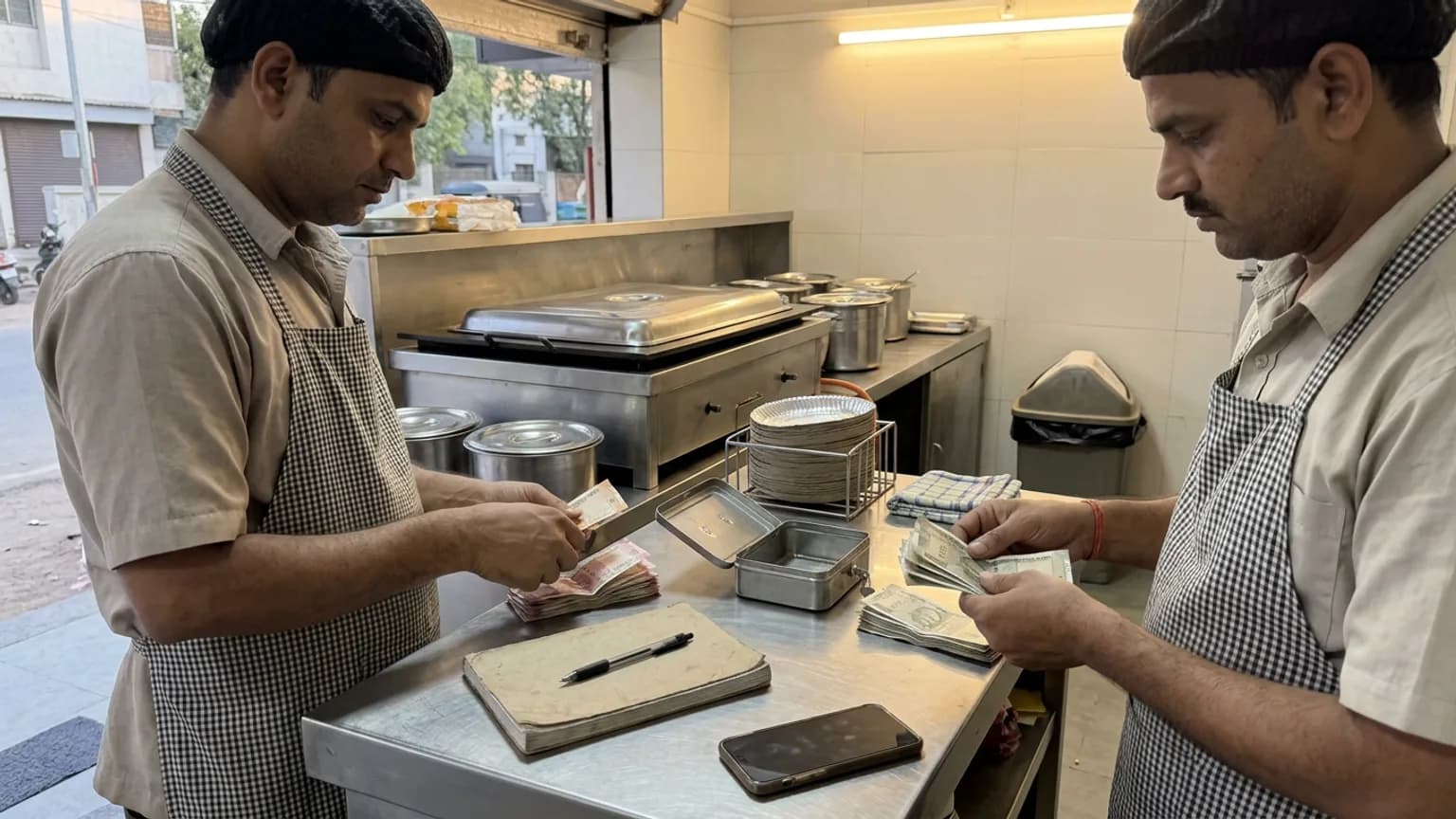
Count cash, check UPI, note expenses and compare with what you sold. Our daily cash closing routine takes ten minutes.
Cut and fix after seven days
Drop the item nobody ordered, make more of what sold out, and change the price that left no margin.
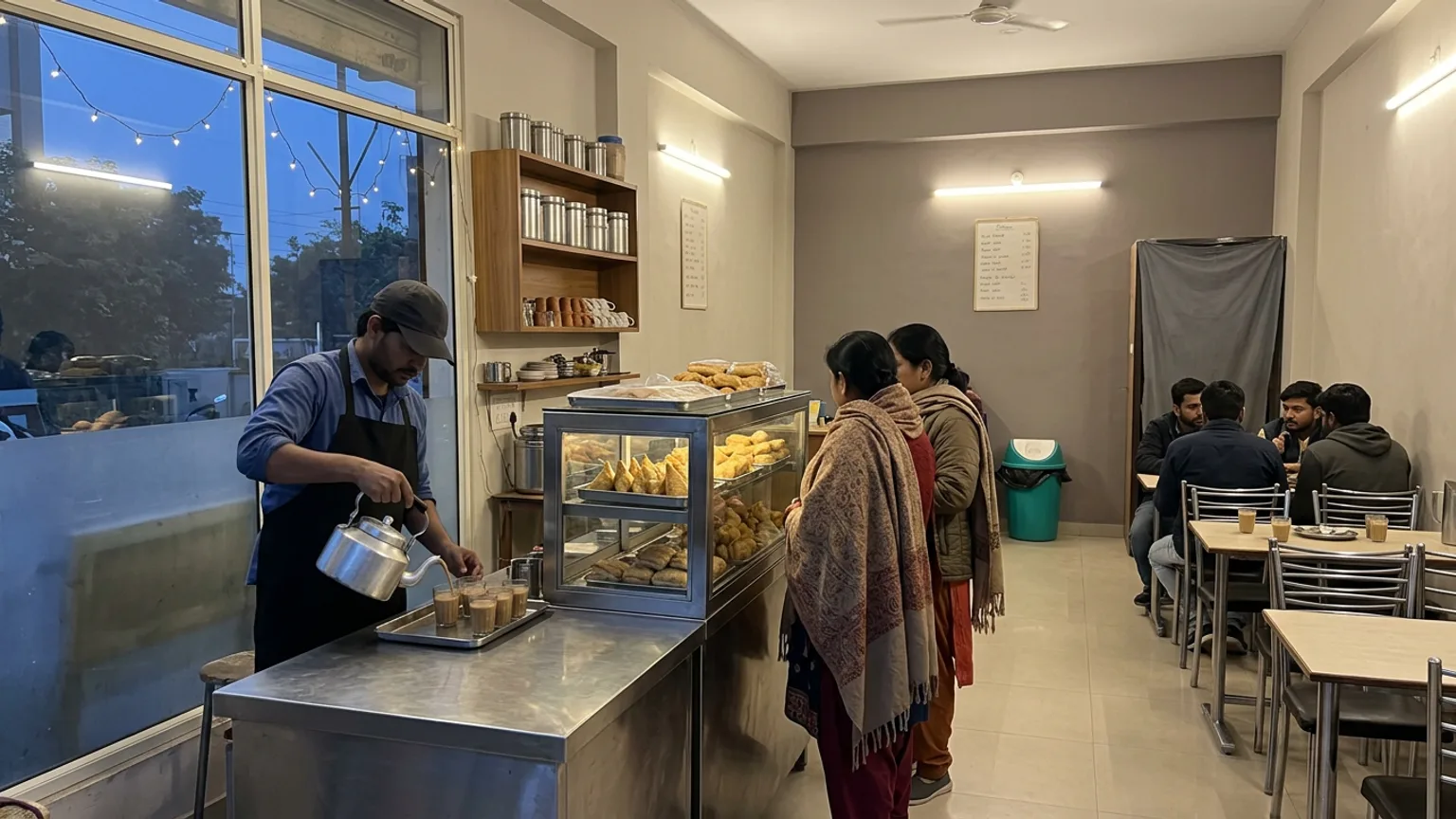
Once the crowd builds, the slow part is usually the counter, not the kitchen: taking orders, giving change and calling names. Our guide on how to reduce waiting time at your food stall covers the fixes that help most.
Where a storefront helps a new stall
You do not need software to open a stall. But a few things get easier once your menu lives on a phone instead of a painted board. With KioSnap, you get a storefront on its own link and one QR code to print for your counter. When you change a price or swap in the winter line, the menu updates without reprinting. On paid plans you can also photograph your printed or handwritten menu and let the AI type in the items and prices; see scan your menu with AI.
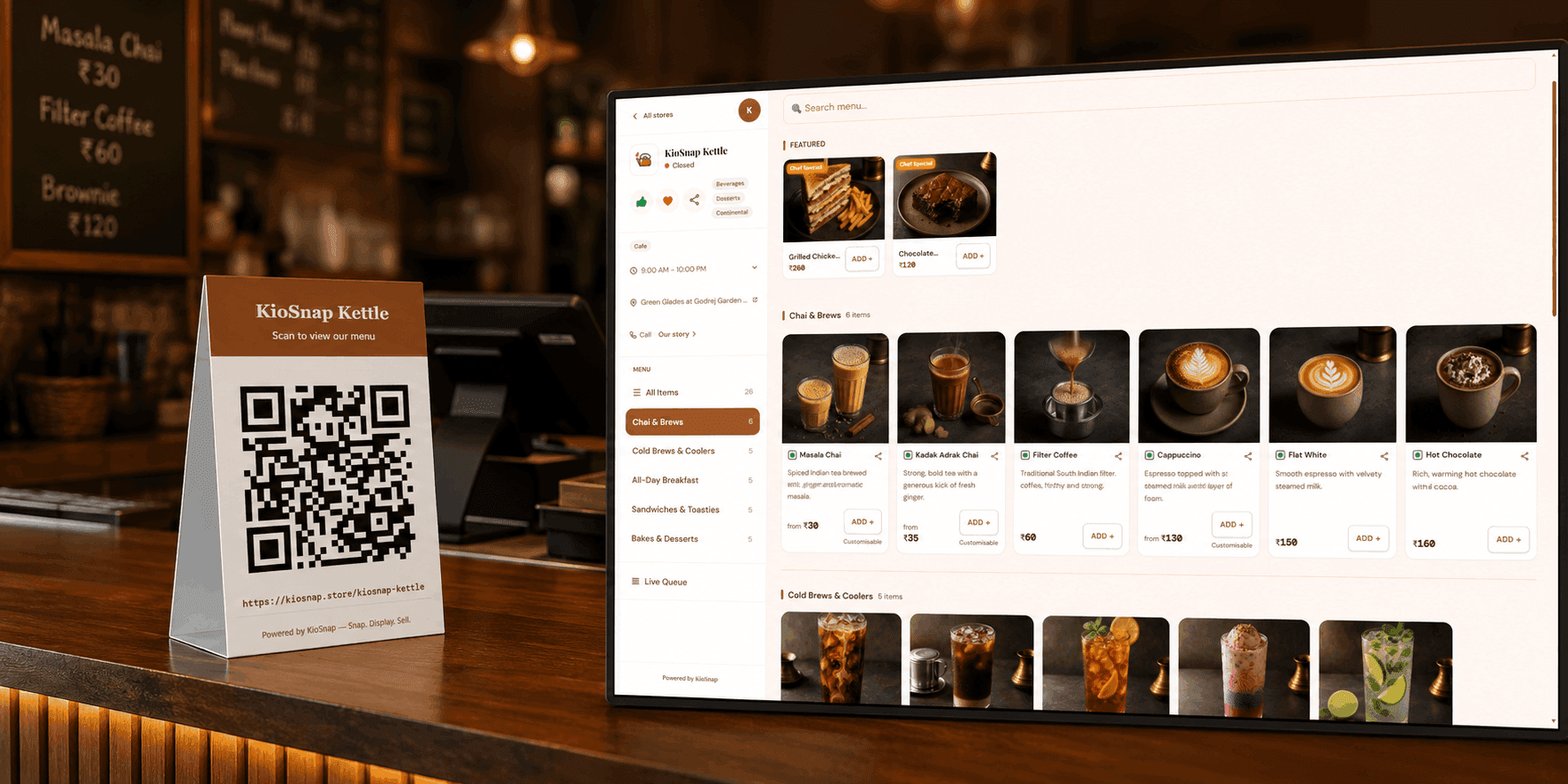
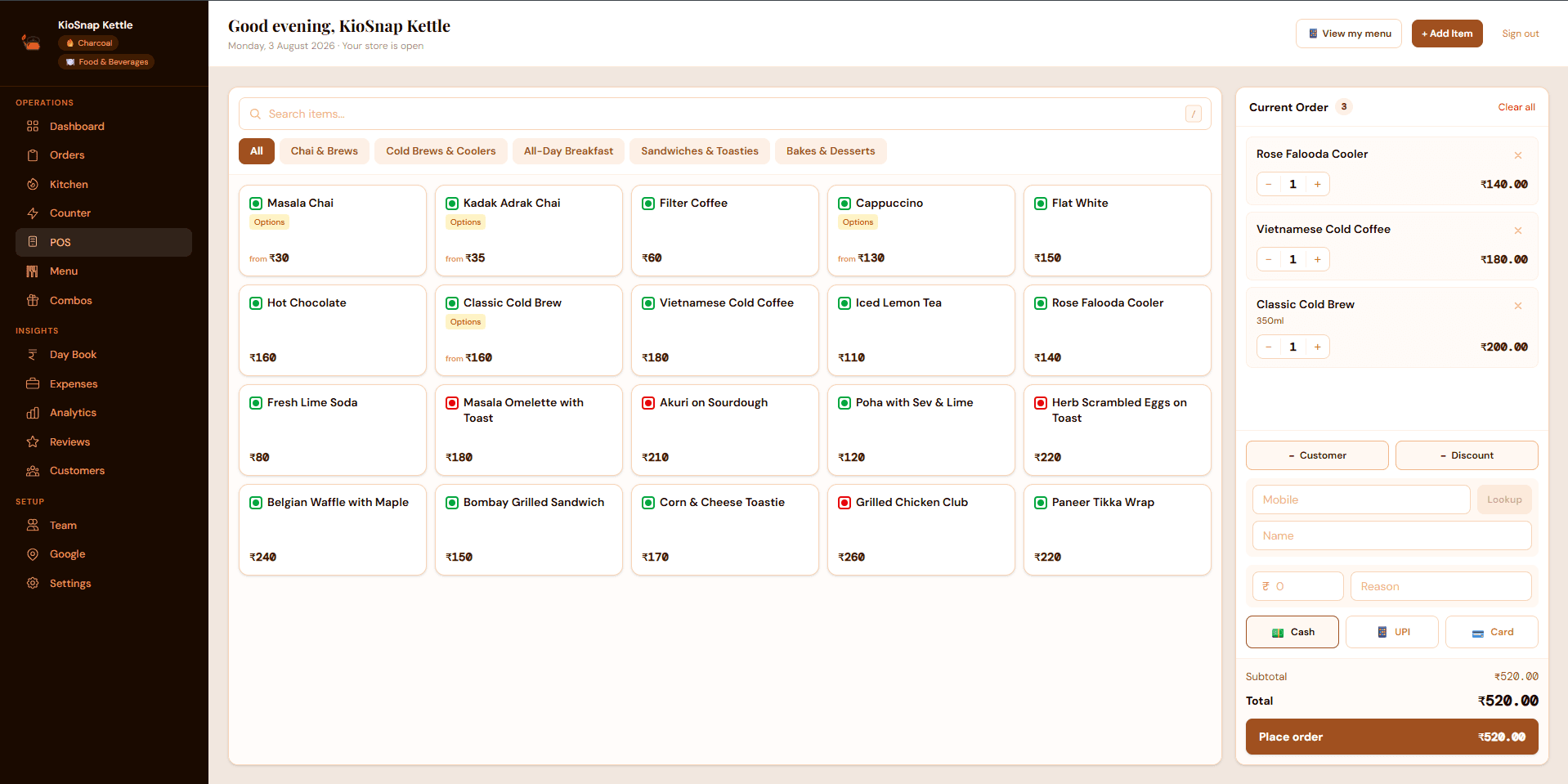
On the free Wood plan, the QR shows a three-item menu for customers to browse. From the Charcoal plan at ₹299 a month, customers can order from their own phone at your counter and watch their order move in a queue, while you take walk-up orders on the built-in POS. Customers pay you by cash or UPI at the counter, as they do now, and every sale lands in a day book that closes with the day. See take orders with POS for how the counter works.
- to start on the free plan
- ₹0
- a month to take orders
- ₹299
- free trial on paid plans
- 14 days
- commission on your sales
- 0%
Paid plans have a 14-day free trial and a one-time ₹199 setup fee, and KioSnap takes no commission on what you sell. Details are on the pricing page.
The short version
Count footfall before you sign for a spot. Open with five to eight fast items priced from your own costs. Get FSSAI registration on FoSCoS, or check whether your street vending certificate already covers you. Keep a month of running costs aside, treat the first week as a test, and close every day with the numbers. If you open in the next few weeks, the cold evenings are on your side.
Common questions
Do I need an FSSAI licence for a small food stall?
You need FSSAI registration, which is simpler than a licence. From 1 April 2026, basic registration covers yearly turnover up to ₹1.5 crore. Vendors registered under the Street Vendors Act, 2014 are treated as registered with FSSAI and do not need a second registration.
How much money do I need to start a food stall?
It depends on your city, food and setup. List the cart, equipment, licences and first stock, get two quotes for each, and keep at least one month of rent, gas, ingredients and wages aside before you open.
Which food stall sells best in winter?
Hot, quick items: chai, soups, momos, roasted sweet potato, bhutta and hot sweets like gajar halwa. Choose the one your spot is missing rather than the one it already has.
Can customers order from my stall on their phone without an app?
Yes. With KioSnap, customers scan your QR and order in the browser on their own phone from the Charcoal plan up. They pay you directly by cash or UPI at the counter.
Put this into practice today
Create your free storefront in minutes. No app for your customers, zero commission on your sales.