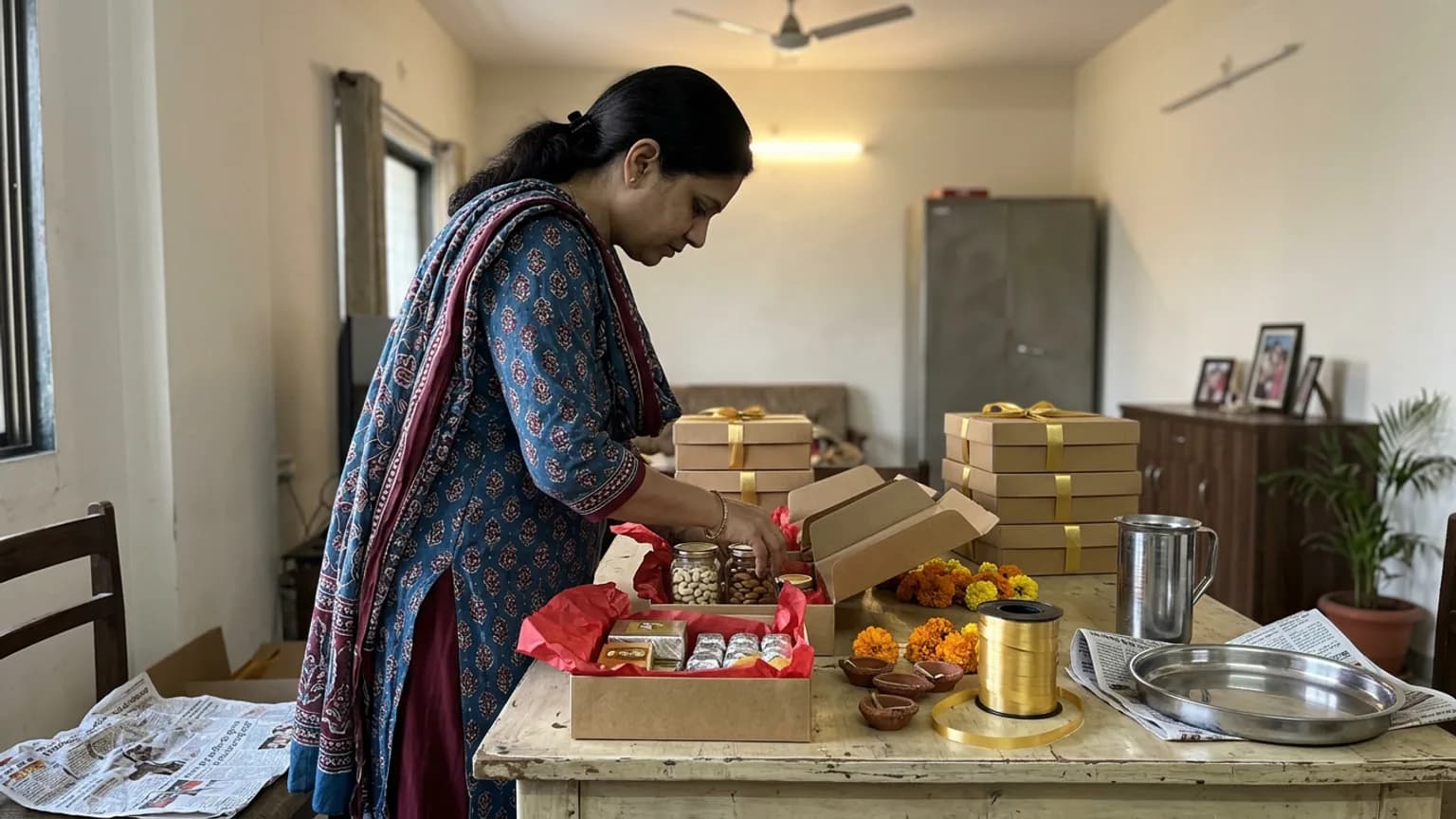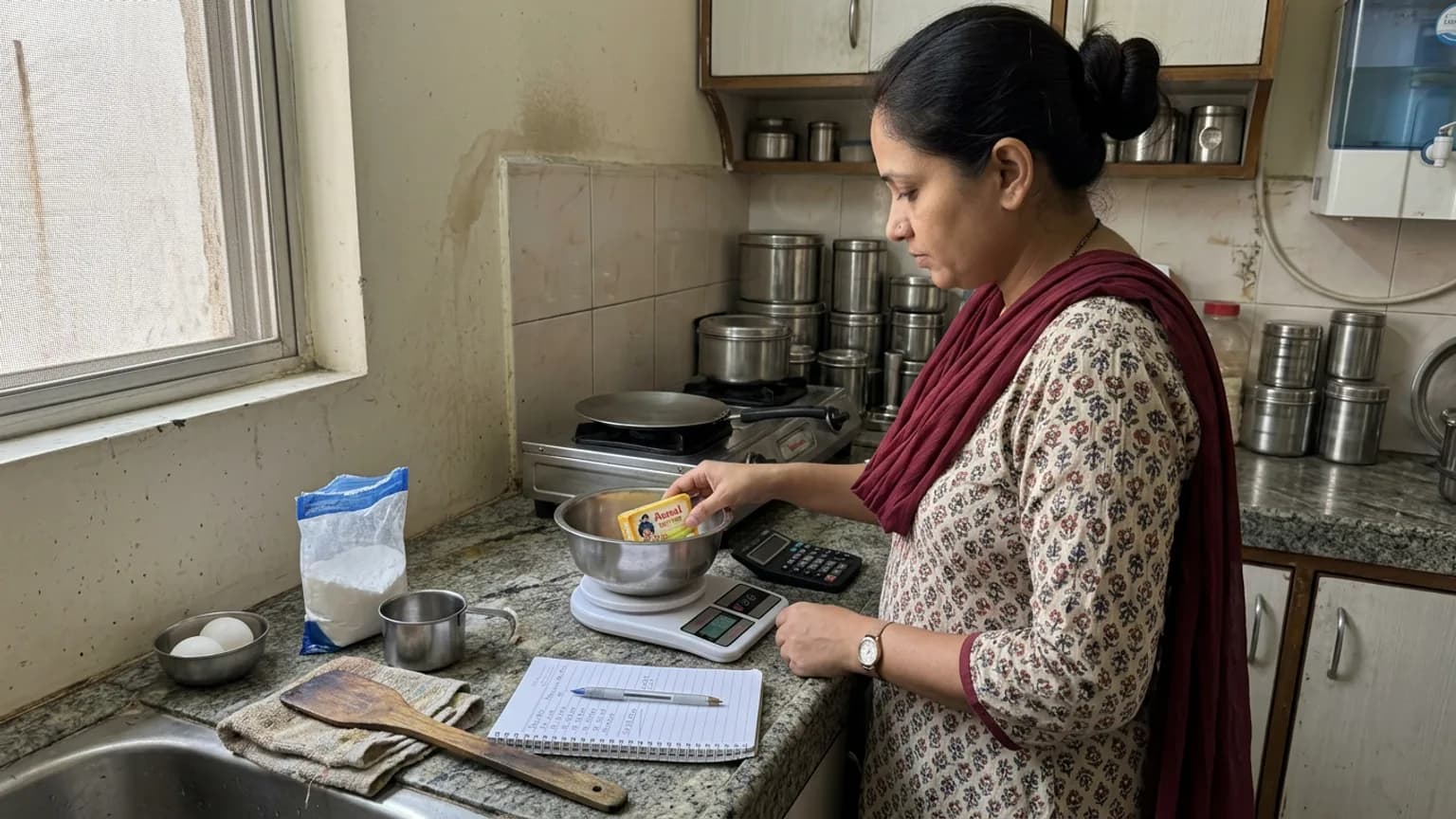
How to Start a Tiffin Service from Home in India
9 min read
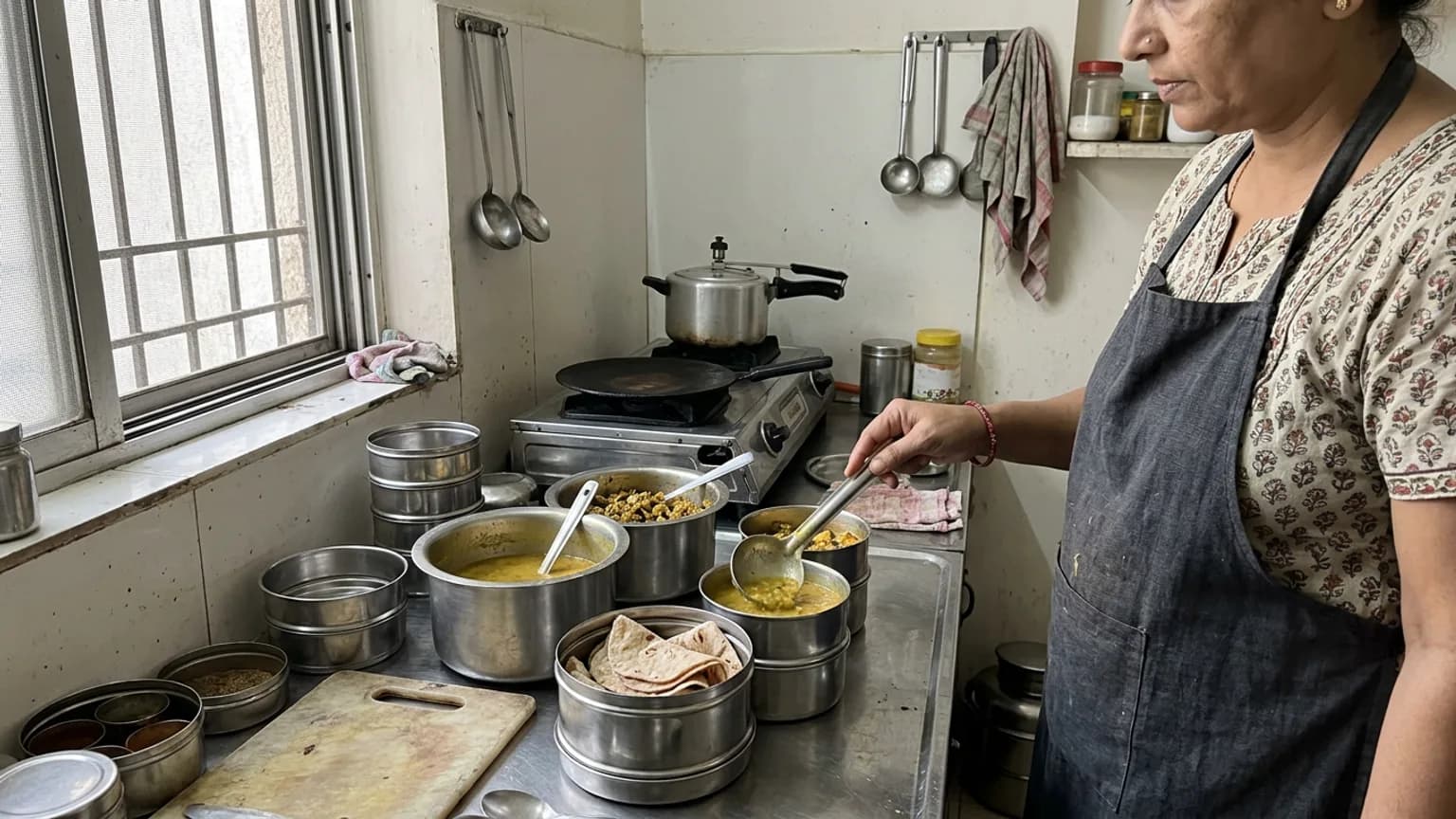
A home tiffin service is one of the few food businesses where the customers are already waiting: office workers, students and people living alone who are tired of eating outside. The hard part is not cooking. It is running a daily routine that stays profitable when someone is on leave, a customer pays late and Diwali empties half your list. This guide covers how to start a tiffin service from home in India, from pricing one meal to collecting the month's money.
It is written for one person cooking for 10 to 40 customers, not for a cloud kitchen. The figures in the examples are illustrative, so swap in your own costs.
Decide what you will sell before you cook anything
The tiffin services that last are narrow. Pick one meal slot and one promise, then build the rest around them.
- One meal slot first. Weekday lunch is the usual start: one delivery run, one cooking window, and customers who are certain to want it. Add dinner only after lunch runs smoothly.
- A fixed rhythm. For example a dal or kadhi, a dry sabzi, rotis, rice and a salad or sweet, with the menu rotating on a weekly pattern customers can predict.
- One or two plan sizes. A full meal and a lighter one are enough. Every extra option is another thing to cook, pack and remember.
- A delivery radius you can ride in your lunch window. If the run takes more than about an hour, the last tiffin goes out cold and you lose customers at the far end.
Get the basics in place
Food sold to customers needs an FSSAI registration, and that includes a home kitchen. The categories and fees depend on your size and the rules change, so check the current position on the official FSSAI FoSCoS portal before you start taking money, rather than relying on a blog.
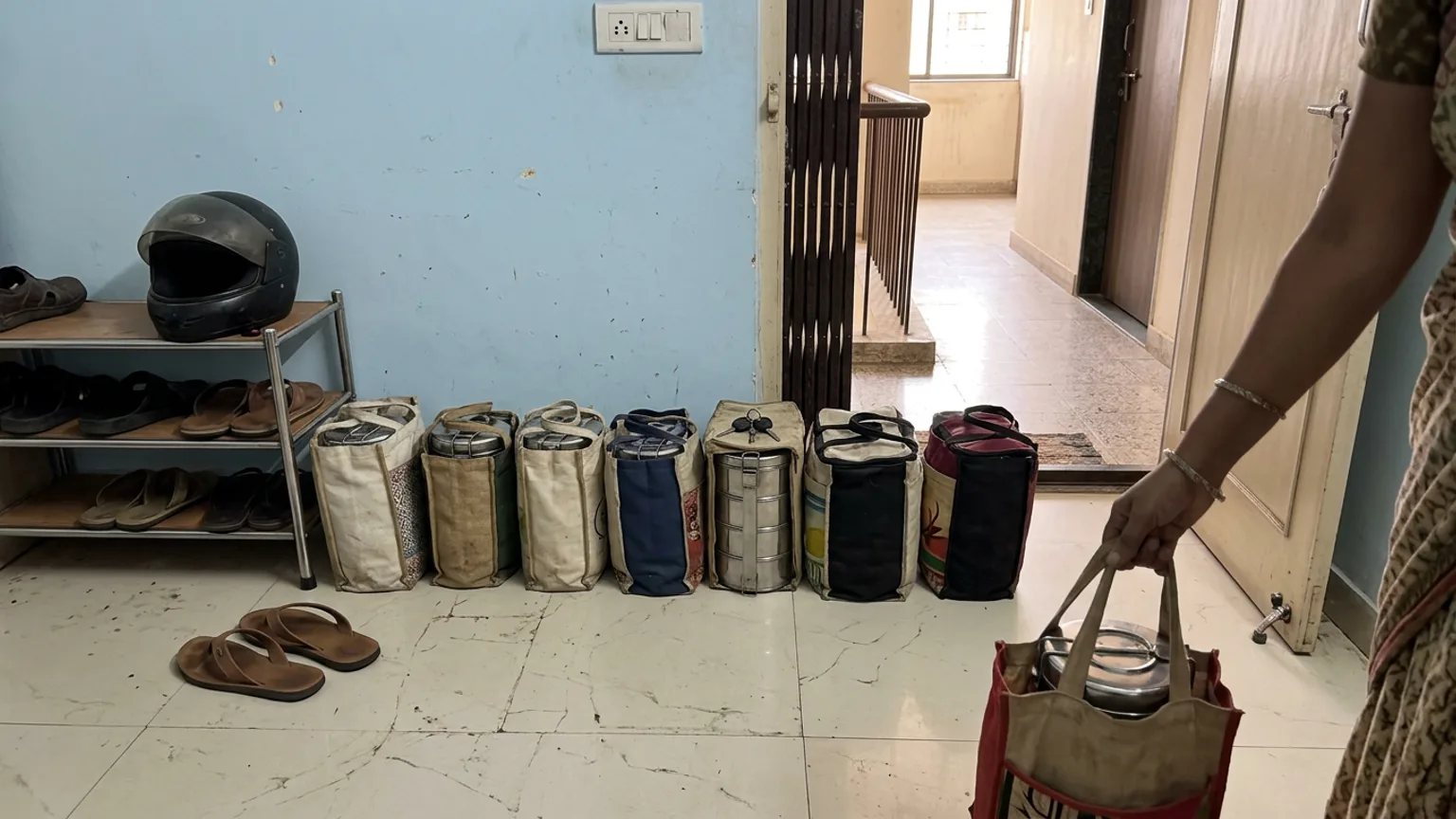
- Containers. Steel tiffin carriers or sealed food-grade boxes that keep food hot and do not leak. Number them so you know which comes back from whom.
- A second burner and a big cooker. The jump from 5 to 25 tiffins is mostly a capacity problem, not a skill problem.
- A way to deliver. Your own scooter for the first few weeks, then a part-time helper when the route outgrows you.
- A basic kitchen routine. Clean surfaces, covered food and a fixed time for packing. Customers notice reliability before they notice taste.
Price one tiffin, then the plan
Do not copy the tiffin service two streets away. Work out what one meal costs you, add a margin, and then build the plan price from it. If you have priced home-baked goods before, it is the same idea as pricing homemade cakes: count every cost, including your own time.
| Cost for one tiffin | Example | What it covers |
|---|---|---|
| Ingredients | ₹45 | Dal, sabzi, atta, rice, oil and spices, with wastage |
| Packaging | ₹5 | Foil, a carry bag, a napkin, spread across reusable boxes |
| Gas and electricity | ₹6 | Your monthly bills divided by tiffins made |
| Delivery | ₹10 | Fuel and your helper's share |
| Your time | ₹20 | About 25 minutes at the hourly rate you would accept |
| Total cost | ₹86 | Add the five lines above |
| Price with a margin | ₹110 | About a quarter on top of cost, rounded |
At ₹110 a meal and 26 working days, a customer's plan comes to ₹2,860 for the month. Round it to a plan price you can say out loud, such as ₹2,800 for 26 lunches, and keep a per-meal price for one-off days. In this example, 20 customers bring in about ₹56,000 for the month before costs.
Handle skips, pauses and festivals in writing
Most tiffin disputes are about days that were not eaten. Write the rules down once and show them to every new customer.
Set a cut-off
Choose a time the evening before, for example 9 pm, after which tomorrow's tiffin is cooked and cannot be skipped.
Decide what a skip means
A skip before the cut-off is not billed. A skip after it is. Decide whether missed days carry forward, and say so.
Plan your own holidays
Tell customers the festival and holiday dates a month ahead and price the plan for the days you actually cook.
Allow pauses
A customer going home for a week should be able to pause and resume, rather than cancel and never return.
Say how you collect
Advance for the month, weekly, or settled at month end. Pick one default, and put it where customers see it first.
Diwali is on 8 November this year, so this season is the moment to write the rules. Many customers travel home in the week around it, so tell them early which days you are closed and what happens to their plan. The same applies to the wedding season that follows from late November, when some customers eat at functions and skip more days. If you also make festive food, our plan for a Diwali hamper business from home covers that side.
Collect the money without chasing anyone
Collecting is where a small tiffin service quietly loses the most. A customer who owes for three weeks is awkward to ask, and an unpaid list in a notebook never matches what customers remember. The simple fix is one payment arrangement per customer, agreed before the first meal.
| Arrangement | How it works | Best for |
|---|---|---|
| Pay as you go | The customer pays for each tiffin when it arrives | New customers and one-off days |
| Advance balance | The customer tops up, and each tiffin is taken from the balance | Regulars, because you hold the money before you cook |
| Monthly settlement | Meals are added up and settled at month end | Offices and trusted customers |
Whichever you pick, give the customer a clear record of what was delivered and what they owe. Many disputes disappear when the customer can see the list.
Where KioSnap fits, and where it does not
You can run a tiffin service with a notebook and WhatsApp for a while. Once you pass a dozen customers, three things start to slip: who skips tomorrow, which day's delivery is which, and who owes what. KioSnap has a feature for exactly that, called customer subscriptions.
- A customer subscribes from your storefront to a standing order, such as every day, chosen days or once a week, and picks one of three payment arrangements: pay as you go, an advance balance or monthly settlement.
- You switch it on in your settings and choose whether new subscriptions need your approval first.
- Each due delivery appears as an ordinary order in your Scheduled tab, so tomorrow's cooking list is one screen.
- A customer can skip a day before your cut-off, and you can pause a subscription or record money received.
- Skips, pauses and the balance each customer owes are kept in one place instead of a notebook.
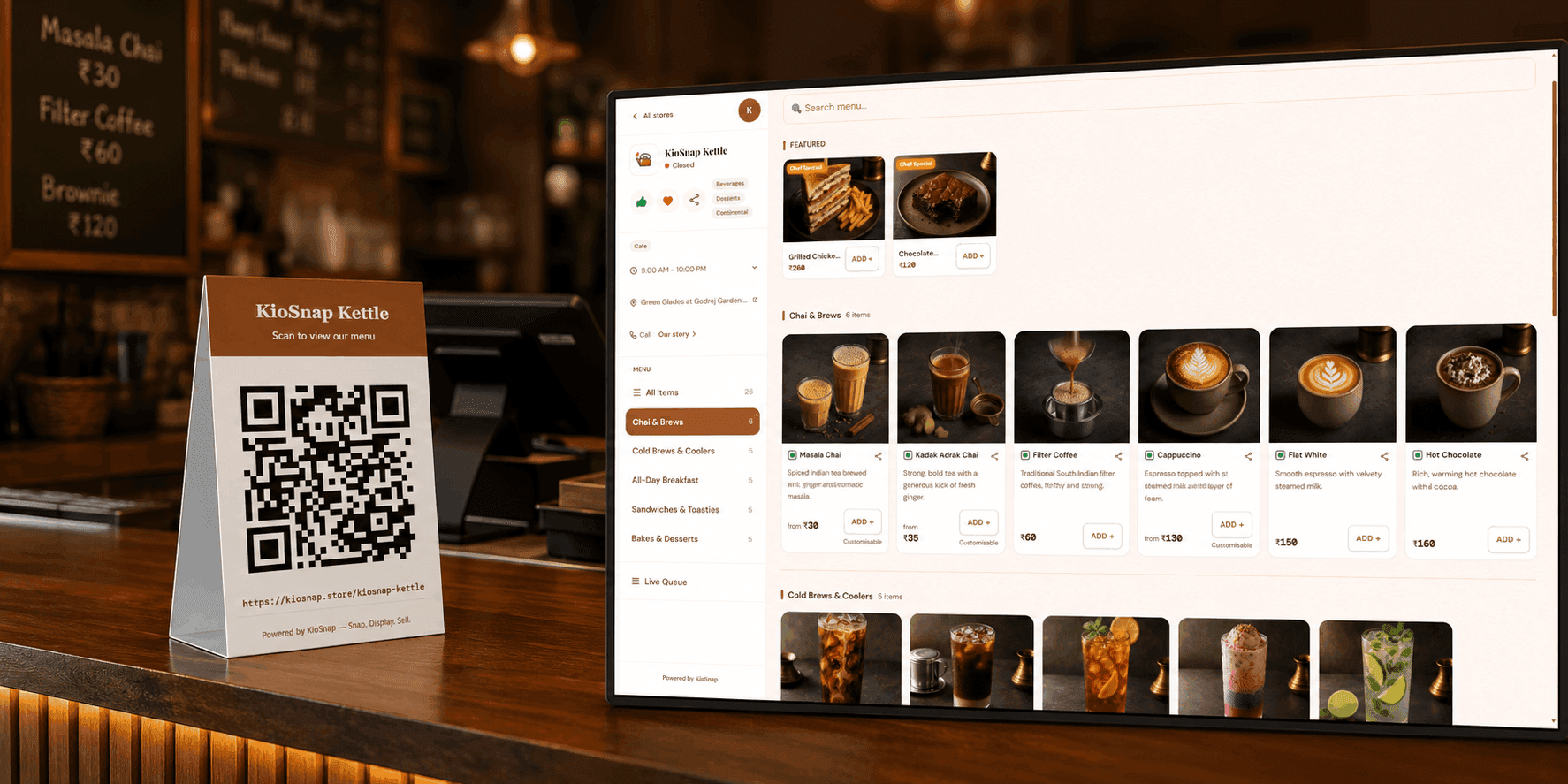
Be clear about the limits. KioSnap does not collect customers' money: they pay you in cash or UPI, and you record it. There is no commission on what you earn. Subscriptions start on the Charcoal plan at ₹299 a month, with a 14-day free trial and a one-time ₹199 setup, and Charcoal carries up to 10 active subscriptions. The Gas plan carries 50 and Solar has no cap; see pricing. The free Wood plan only displays a catalog and cannot take orders.
One thing to check at signup: delivery options depend on the business category you choose. The food counter category is built for pickup and does not offer delivery, so if you deliver your tiffins, check the delivery options of the category before you pick it. The home-brands page shows how a home kitchen sets up, and plans, trial and billing explains the trial.
- active subscriptions on Charcoal
- 10
- active subscriptions on Gas
- 50
- free trial on paid plans
- 14 days
- commission on your sales
- 0%
Know your real profit
Revenue is not profit. Ingredients move with the season, gas cylinders arrive in lumps and a helper's pay is easy to forget. Record each spend as it happens with track your expenses, then compare it with what came in.
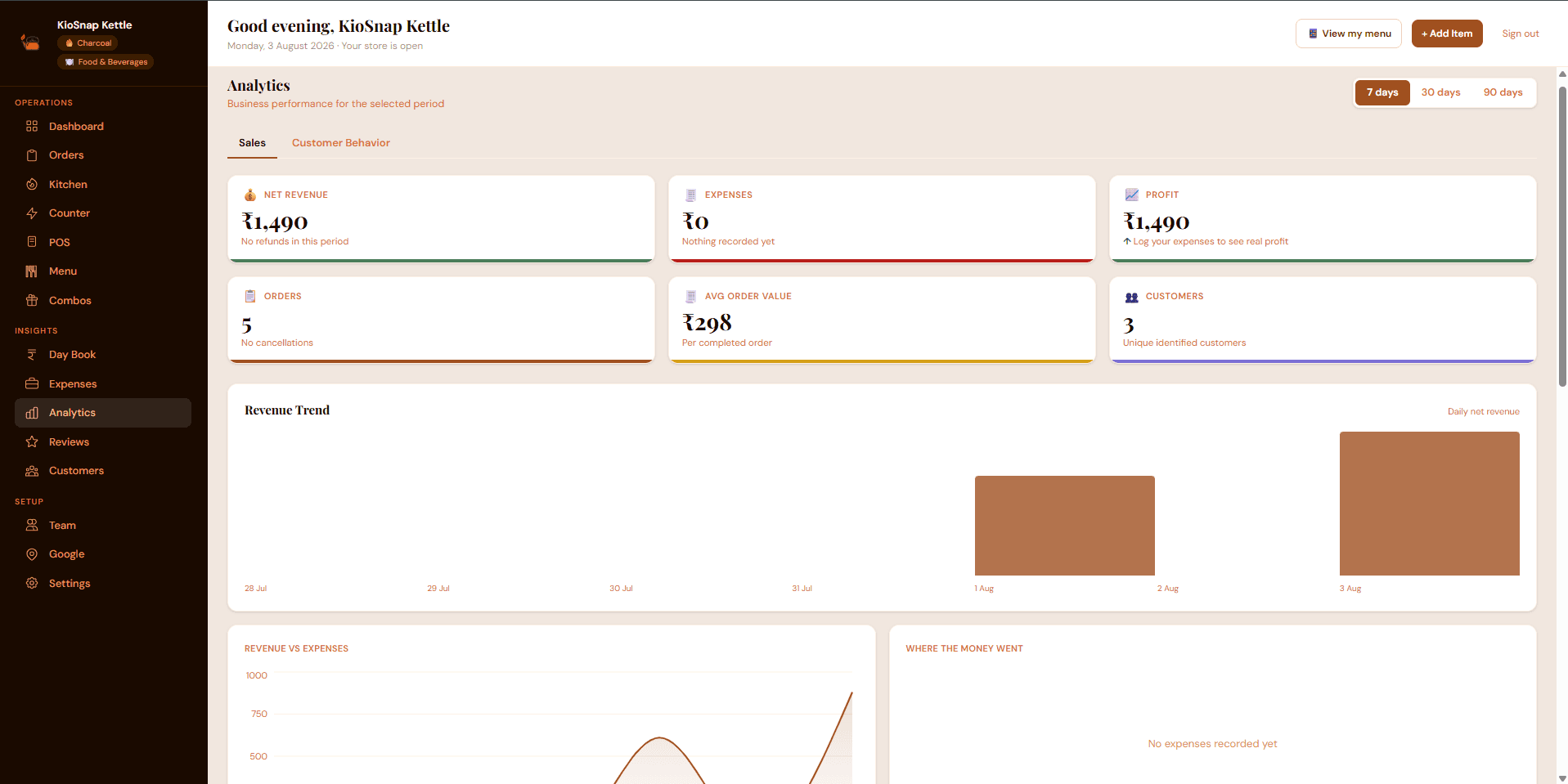
If the profit per meal has shrunk, move the price or the menu before the next plan starts. Customers accept a small, announced change far more easily than a surprise.
Your first month, week by week
Week 1: fix the menu and costs
Cook the week's menu twice, weigh what you use and price one tiffin from your real figures.
Week 2: free trial lunches
Give three trial lunches each to your first ten people and note what they leave uneaten.
Week 3: write the rules
Put the cut-off, skip, pause and payment rules in one short message and send it before anyone pays.
Week 4: start the first plans
Begin paid plans with the people who finished the trial, and review the profit at month end.
The short version
Start with one meal slot and ten customers, price a single tiffin from real costs, write down your skip, holiday and payment rules before the first plan, and keep a record of who owes what. Tools help once you pass a dozen customers, but the routine is what customers pay for.
Common questions
How much does it cost to start a tiffin service from home?
Mostly containers, a second burner, a larger cooker, your FSSAI registration and the first few weeks of groceries. The total depends on how many customers you plan to serve, so cost it from your own list rather than a round figure from a blog.
Do I need an FSSAI licence for a home tiffin service?
Yes, any business selling food needs FSSAI registration, home kitchens included. The category and fee depend on your size, and rules change, so check the current position on the official FoSCoS portal.
How should I price a monthly tiffin plan?
Work out the full cost of one tiffin, including packaging, gas, delivery and your time, add a margin, then multiply by the days you will cook and round to a clean number. Do not copy another service's price.
What happens when a customer skips a day?
Set a cut-off time the evening before. A skip before it is not billed, and a skip after it is. Write the rule down so every customer hears the same thing.
Can KioSnap take payment from my tiffin customers?
No. Customers pay you directly in cash or UPI and you record what you receive. KioSnap takes no commission on your sales.
Put this into practice today
Create your free storefront in minutes. No app for your customers, zero commission on your sales.